
Why the Thomas Clarkson Gold Medal Means More Than a Prize
June 23, 2026
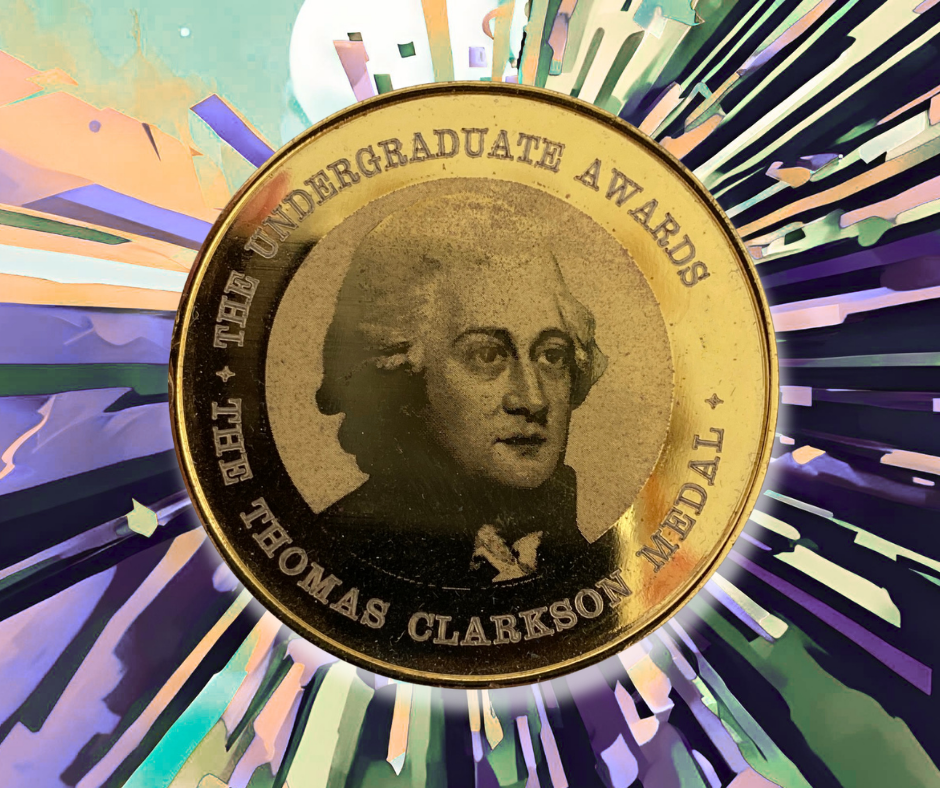
Every year, the highest-performing submission in each category of The Global Undergraduate Awards is recognised with the Thomas Clarkson Gold Medal.
For many this translates into the hope of opportunity following the announcement at the end of the judging process. But behind that medal is a name with deep meaning, and understanding that meaning says a great deal about what it truly means to become a Global Winner.
Thomas Clarkson was a student, a campaigner and a thinker, but more than that, he was someone who believed ideas mattered enough to act upon them.
As a student at the University of Cambridge in the 1780s, Clarkson entered an essay competition asking whether it was lawful to enslave human beings against their will. What began as an academic exercise became something much larger. The research process profoundly affected him. Rather than allowing the work to remain confined to a university competition, he devoted his life to investigating injustice, gathering evidence, persuading institutions and mobilising people toward change.
What matters most in Clarkson’s story is not simply the historical issue he confronted. It is the principle behind it..the belief that intellectual work can shape the world beyond the classroom.
That idea sits at the heart of The Global Undergraduate Awards today.
The Thomas Clarkson Gold Medal is not awarded simply for achieving high grades. It recognises undergraduate work that demonstrates originality, depth, courage, creativity and the capacity to influence thinking within a field. It celebrates students willing to ask ambitious questions, challenge assumptions and pursue.
Over the years, Global Winners have gone on to careers in medicine, policy, entrepreneurship, academia, technology, the arts and public leadership. But importantly, many describe the award not as an endpoint, but as a moment that changed how they saw themselves. Recognition at a global level gave them confidence that their ideas had value beyond their own institution.
Today, students are entering increasingly competitive and rapidly changing global environments. Technical knowledge of their field alone is no longer enough. Employers, institutions and societies are looking for people who can think independently, connect disciplines, communicate ideas clearly and engage meaningfully with the challenges shaping the future.
For this research, I have already been invited to present at the University of Glasgow’s Future of Nuclear Disarmament workshop and the University of Leicester’s Technology and Peace conference.
The Thomas Clarkson Gold Medal symbolises precisely those qualities.
It represents curiosity paired with action.
Research paired with purpose.
Academic excellence paired with real-world relevance.
Most importantly, it represents the idea that undergraduate work matters.
Clarkson’s legacy offers an important reminder that some of the most influential journeys begin with a single piece of work, a difficult question or an idea pursued further than expected.
That was true for Thomas Clarkson.
