
Alumni Spotlight : 2025 Global Winners Interviews
In conversation with Raegan Cordelia Sim, Shaikha Yousef Mohammed Rahmah Alshamsi and Nikolai Argatoff
April 20, 2026
We recently spoke with three of our 2025 Global Winners to reflect on their experience with the Global Undergraduate Awards.
From shaping their prize-winning research to presenting on an international stage at the Global Summit in Dublin last November. They discuss the inspiration behind their work, the questions that drove their curiosity and the determination required to turn their ideas into reality.
In conversation with our interviewer and videographer, Greg Purcell.
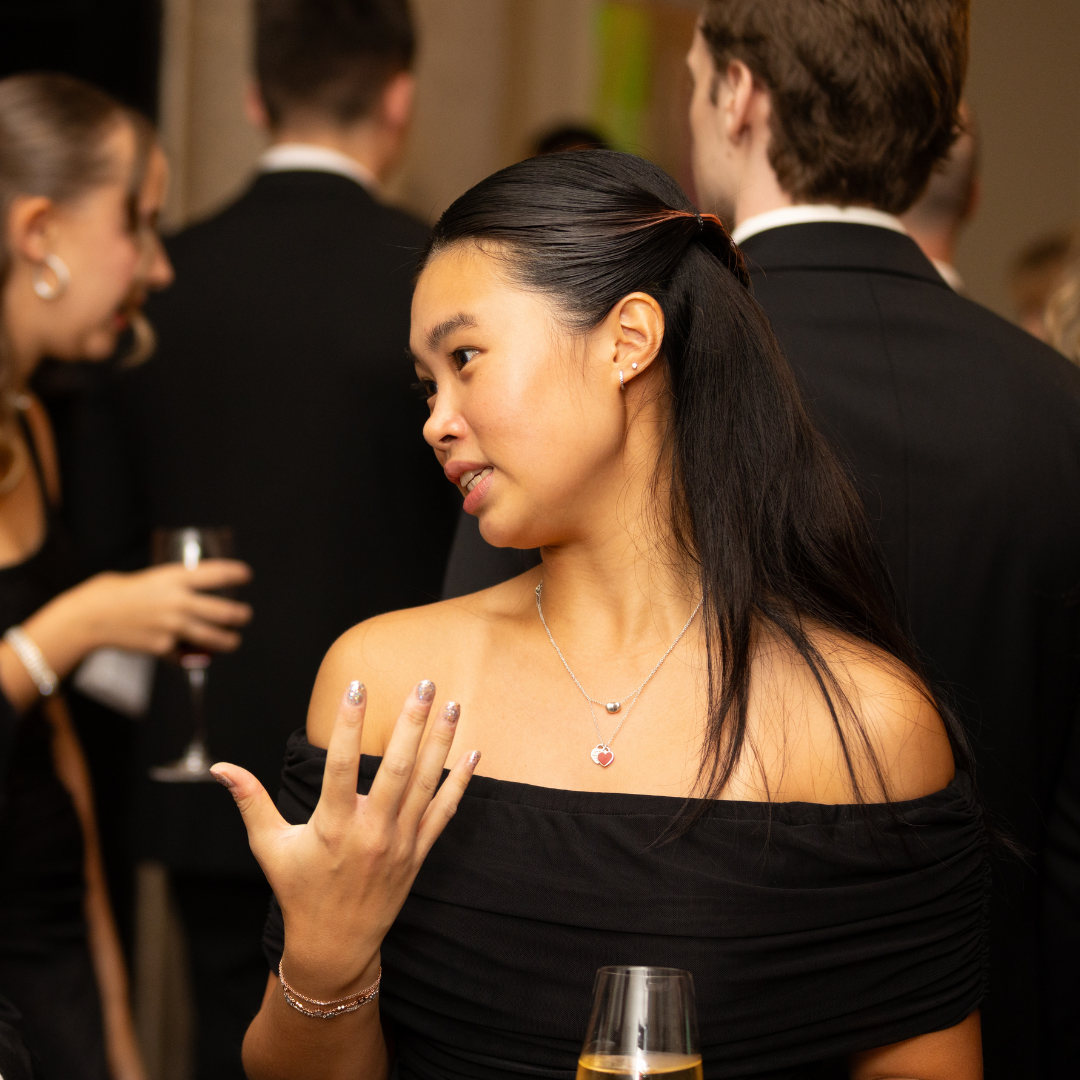
Raegan Cordelia Sim
Ragean is the current 2025 Global Winner for the category Life Sciences from the National University of Singapore.
Read her award-winning paper on “Intercellular mitochondrial transfer from poly-aneuploid cancer cells drives chemotherapy resistance in ovarian cancer” in our library.
How does it feel to be recognised as a Global Winner?
I’m deeply honored. I wasn’t expecting this at all when I submitted my entry. I was hoping to scrape by with a highly commended or maybe even a regional winner. So to be named the global winner, I think it’s truly an honor. But I think more than just that, it shows the importance of my work and how the the field, the academic field and the judges view that my work is important to society. I think that recognition means more to me than actually winning, because I know that this is extra motivation for me to continue pursuing what I’m doing right now and to help in our fight against cancer.
Incredible. Tell me a little bit about what you’re doing.
Sure. So I’m looking into my thesis specifically was looking into ovarian cancer. But I’ve since expanded that. So I’m looking into ovarian, breast, colorectal and lung cancer. And we’re looking at a specific subset of cancer cells, which are extremely, aggressive. So they evade treatment therapies. They don’t die essentially. At the moment we can’t really figure out what can kill them. So we’re looking into that, this specific type of cancer cells also responsible for a lot of the aggressive cancers that we see right now. And they’re the reason why cancer survival is rather low. So we’re looking into that. We’re trying to figure out ways that we can target their survival mechanisms so that we can therefore, kill or eradicate these cancers from the human body.
Well, that’s incredible work. It’s really important. What motivates you?
I think actually, there’s a lot of things. A lot of people have experienced family members or loved ones, either having cancer, going through cancer treatment or maybe have passed on from cancer. I’m no different. I have some people in my life who have passed on from cancer.
But I would say, I think something that motivates me beyond these special people in my life who I have lost, would be just the fact that cancer is such a terrible thing. To know that every few life cycles cancer changes, evolves and mutate to become even stronger. It gives me more motivation to want to fight and to want to give other cancer patients and other families who have loved ones with cancer. I want to give them a fighting chance; the people that I’ve lost were not able to have that fighting chance. But if I can in any way, shape or form give other people fighting chances, then that’s what really motivates me.
Well, it’s incredibly inspiring. Thank you for your work. What’s your experience been of the global undergraduate awards so far?
It’s honestly, I think it’s much better than I could have ever imagined. I knew coming into this that there will be a lot of opportunity to meet people from all walks of life and all over the world. But I don’t think I could have imagined that I would connect with so many people. Although we don’t share common studies, I’ve met people from various specialities, and we may not understand each other’s projects as well, but I think to just see everyone coming together to celebrate their work has been really incredible and inspiring. And then at the same time, I built connections across the world. And it’s just really amazing to see how people are inspired in their own way, just like how I’m inspired my fight against cancer, other people inspired by for example, preserving the environment and so it’s really inspiring to have a group of academics and intellectuals come together.
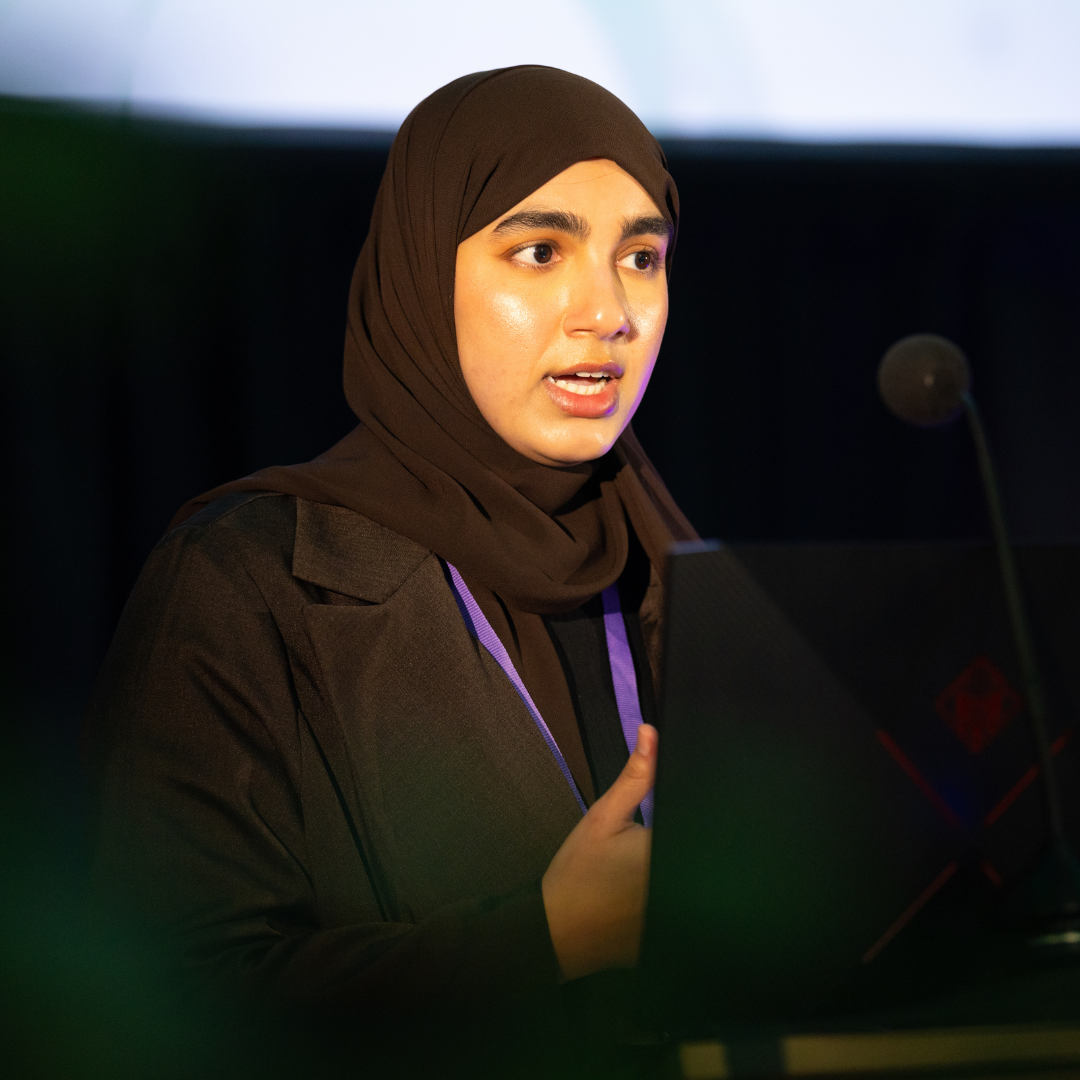
Shaikha Yousef Mohammed Rahmah Alshamsi
Shaikha is our 2025 Global Winner for the Education category from Higher Colleges of Technology, UAE.
Read her award-winning paper on “Developing Early Childhood Basic Math Skills Through Interactive Learning Centers in the UAE” in our online library.
How does it feel to be recognised as a Global Winner?
It gives me the feeling that we can do it. We can. Everyone can do it. So, now I’m encouraging everybody to apply. You should submit. You should try. Give it a try. I was so surprised when I received the email to tell me I had won, like, how? It was at the global level. Not even the regional, which also would have been a huge achievement. It can be hard to recognise how good your own work is sometimes. We think about ourselves differently from how we think about our loved ones and friends.
What do you like about studying early childhood education?
I like dealing with children. I believe my nieces and nephews, influenced that. So I became interested in learning how to deal with children and how to give them the best. I like teaching them best and taking care of them.
I know you have a mentor you gave you a lot of support and encouragement, would you like speak more about them?
Yes. My mentor, Doctor Robin Ince encouraged us to apply for many competitions and awards. He believes that, that our work can go the extra mile. He always says, “What if it happened, your work is somewhere, impacting someone?”
Do you see a difference between how you felt before you submitted and now?
Yes, because I saw my work as a small thing. Just something in the classroom. I never thought that it could reach a global level.
What would you say if you could talk to that version of yourself now?
I would say, never think that your efforts will go unnoticed. It will definitely turn into something.
If you were speaking to the kids you’re teaching in the future, about applying for the Undergraduate Awards, what would you say?
Do your best. Even if you think that, it’s not enough, it could be better than you imagined. I was in this situation where I thought my work was something small. But it went into something that I never imagined.
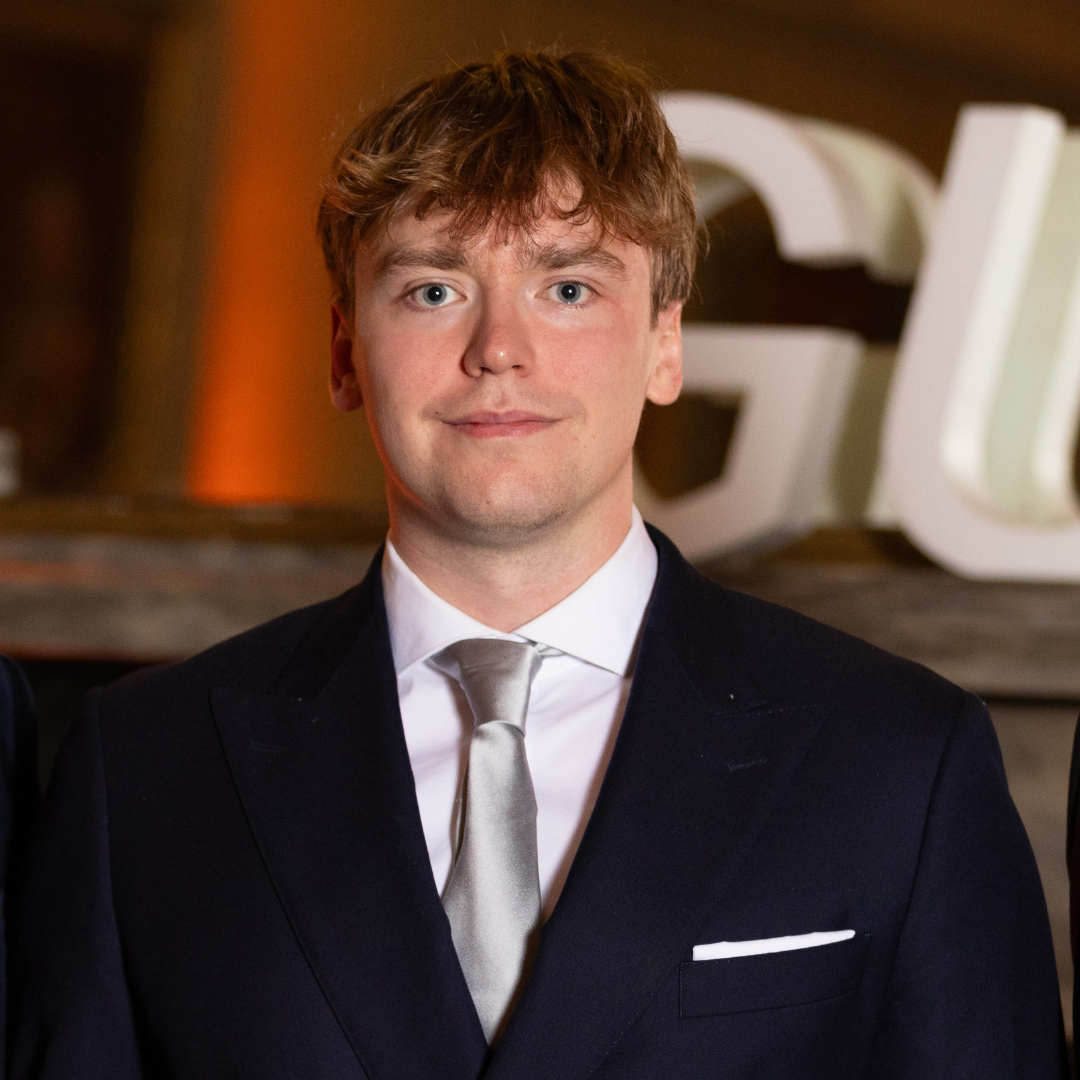
Nikolai Argatoff
In the last of our 2025 alumni spotlight for today, Nikolai Argatoff is our current Mathematics & Physics Global Winner from the University of Helsinki.
Read his article on “Theoretical Investigations of Superconducting Qubits Under a Subharmonic Drive” in our library today.
How does it feel to be recognised as a Global Winner?
It feels a bit surreal. I definitely was not expecting it. It feels very good to be here and it’s a wonderful event. It feels amazing. Almost overwhelmingly unbelievable. To be here with other very talented people.
Why you think the awards are important?
Events like this recognise the success of young researchers. I wasn’t very confident about my thesis. Seeing it recognised in this form is very encouraging. That feels amazing.
When did you arrive in Dublin?
I arrived yesterday evening. That was super cool. I got a ride from the airport and then got to the Church restaurant venue. Then I started to network and discuss with other people. Super fun.
How did that feel?
I had to pinch myself a little bit. One day you are studying, and then the next day you are at an award gala with so many brilliant people.
What preconceptions, hopes, or thoughts did you have before coming to the event?
Preconception-wise, I thought it would be like a much smaller operation. I’m blown away with how much effort and care have been put into this. It’s much bigger than I imagined. I’m very grateful that events like this are in place.
What change do you think being recognised globally will bring in your work or life?
It makes me more confident in what I do. It makes me tell the self-critical part of myself to chill down a little bit and embrace the positive side
What’s next? What does the future hold for you?
Next spring I’m going to do my master’s research. That’s a bit of a different field in physics and quantum chemistry. So that will be an important milestone. After that, it’s still a question mark. Probably PhD studies.
If you were to have a conversation with yourself, before you applied, what would you say?
I would say to myself, believe in yourself and keep an open mind.
