
Things You Should Know: God Is a woman
Is the gender gap in leadership a foundational rule or history's most successful institutional rebrand?
July 29, 2026
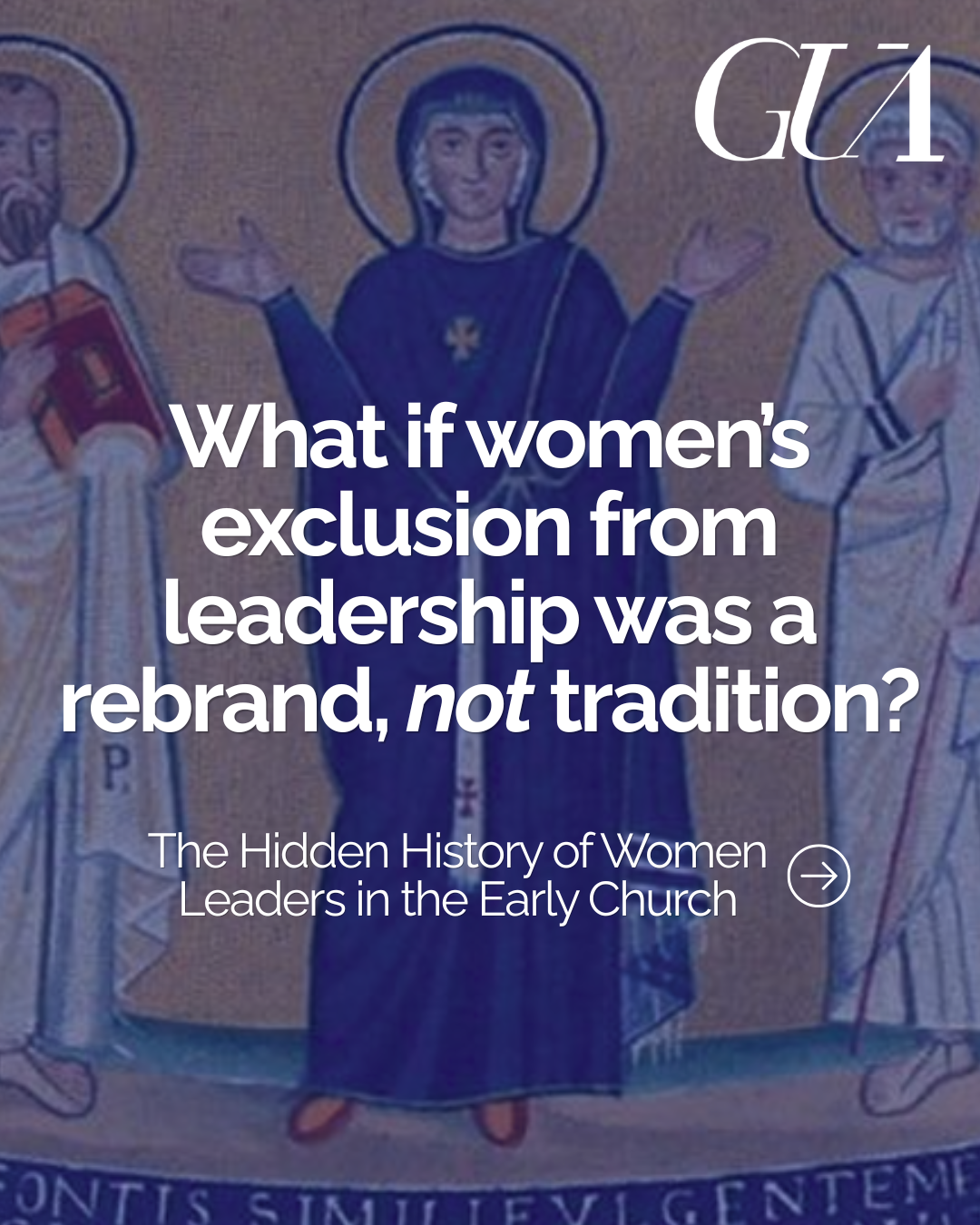
In her globally awarded, peer-reviewed study, “God is a Woman: Women in Positions of High Religious Authority in the Early Church,” Jadyn Faith Zajac from Western University examines the historical roots of the Church’s patriarchal structure.
Her research argues that the current male-oriented hierarchy is a 1,500-year-old “innovation of censorship,” and that female leadership is a foundational reality of the early Church. Ultimately, Zajac’s work reveals that the exclusion of women from leadership is not an ancient truth, but a carefully curated version of history.
The archaeological evidence centers on the catacombs of Naples, where 5th-century funerary portraits of women named Cerula and Bitalia depict them with raised arms in a gesture of Eucharistic authority, flanked by open Gospel books, the hallmark symbol of the episcopacy. Zajac asserts that if these figures were men, historians would have recognised them as Bishops centuries ago.
The research also re-examines Mary of Nazareth. While later tradition paints her as a model of silent submission, early Christian art and extracanonical texts reveal her as a liturgical leader who presided over sacred rites, depicted in 5th-century Roman mosaics wearing the episcopal pallium, a vestment reserved strictly for high religious office.
Zajac identifies a systematic process of damnatio memoriae, the erasure of historical memory, designed to align the early Church with the patriarchal norms of Greco-Roman society, trading its original inclusive structure for a hierarchy that better suited the dominant culture.
This legacy was buried through direct institutional action. In the 5th century, Pope Gelasius I issued decrees condemning women serving at sacred altars, ordering the burning of texts that documented their authority. Visual evidence was similarly suppressed: in 1916, a mosaic of Mary in priestly vestments in the San Venantius Chapel was concealed behind a Baroque altarpiece by order of the Holy See.
Ultimately, reclaiming the suppressed stories of Cerula, Bitalia and the original Mary gives us a historical basis to challenge today’s leadership gap.
The Library is the Global Undergraduate Awards’ free collection of globally recognised research from past winners. In our new series, Things You Should Know, we are spotlighting that work one paper at a time.
