
Alumni Spotlight: 2025 Global Winners Interviews
In conversation with Bryen Isaac Chen Tze-Yang, Waron “Teak” Maneenetr and Yong Jian Ng
April 14, 2026

We recently caught up with three of our 2025 Global Winners to reflect on their journey with The Global Undergraduate Awards
From developing their award-winning research to stepping onto a global stage at the GUA Global Summit in Dublin last November, they share the stories behind their papers, the questions that sparked their curiosity and the persistence it took to bring their ideas to life.
Find out more as they sat down to discuss their feelings and thoughts after their presentations at the last summit with our interviewer and videographer Greg Purcell
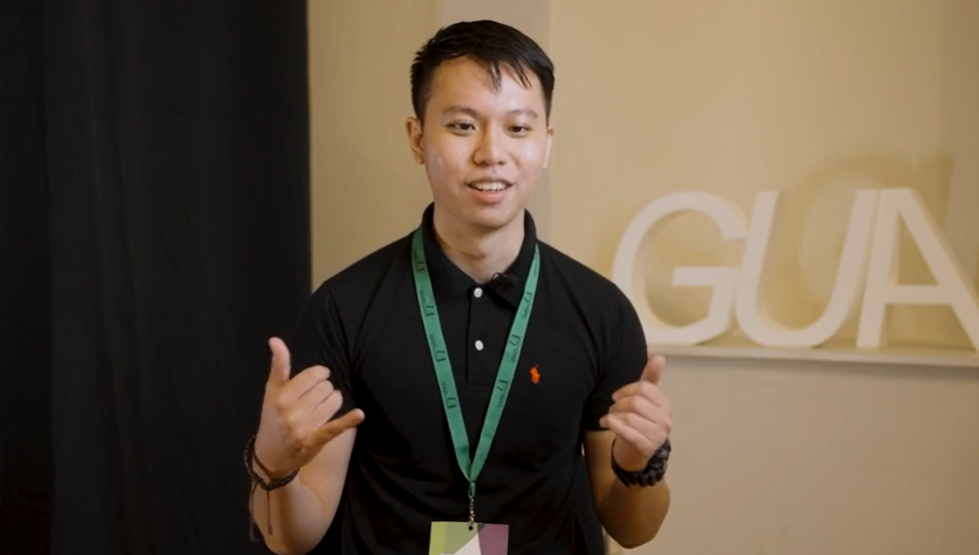
Bryen Isaac Chen Tze-Yang
Bryen is the current 2025 Double Global Winner for categories Art History & Theory and Literature from Nanyang Technological University
Read his published Global Winning paper on “Trauma Playgrounds: Ludic Experiments and Formal Techniques in Traumatic Childhood Fiction” for the Literature category in our library.
How does it feel to be a Double Global Undergraduate Awards winner?
I think it’s amazing to have your work validated. I never really expected this.
Last year, I was double highly commended. I felt really ambitious this year. I wrote last year’s papers during an exchange, and I knew I didn’t show my maximum potential.
To be the joint first double global winner in the history of the Global Undergraduate Awards really threw me off. I remember when I got the news, I was jumping. It’s really nice to have your work validated.
It also taught me to trust myself, to trust my discernment and my intuition. I’m excited to bring the insights that I’ve gained here into my life and my studies.
What’s it like to be here at The Global Undergraduate Summit?
It’s really nice to meet so many people from different backgrounds, who are so passionate about the future they engage with. I had no idea about many categories; for instance, I was speaking to another winner about her work surrounding women’s liturgical leadership in the church. It’s such an unexplored terrain of knowledge.
I never thought about the awards in this way. The excitement is rubbing off on me! It’s incredible to have so many people come together and talk about things they are passionate about and engaged in which has taken them so long to study. It is just so mindblowing to me. I’m so inspired by everyone.
If you were to speak to undergraduate students who have work they’re thinking of submitting, what would you say?
I would say just go for it. I’d never expected to be a winner, much less a double global winner. So getting a call from Dublin telling me I had won the global winner for 2 categories was mind-blowing.
Don’t underestimate your potential and don’t underestimate your abilities. Just try. You have nothing to lose.
It [the awards] taught me to trust myself, to trust my discernment and my intuition. I'm excited to bring the insights that I've gained here into my life and my studies.
Bryen Isaac Chen Tze-Yang, 2025 Double Global Winner for Art History & Theory and Literature Categories
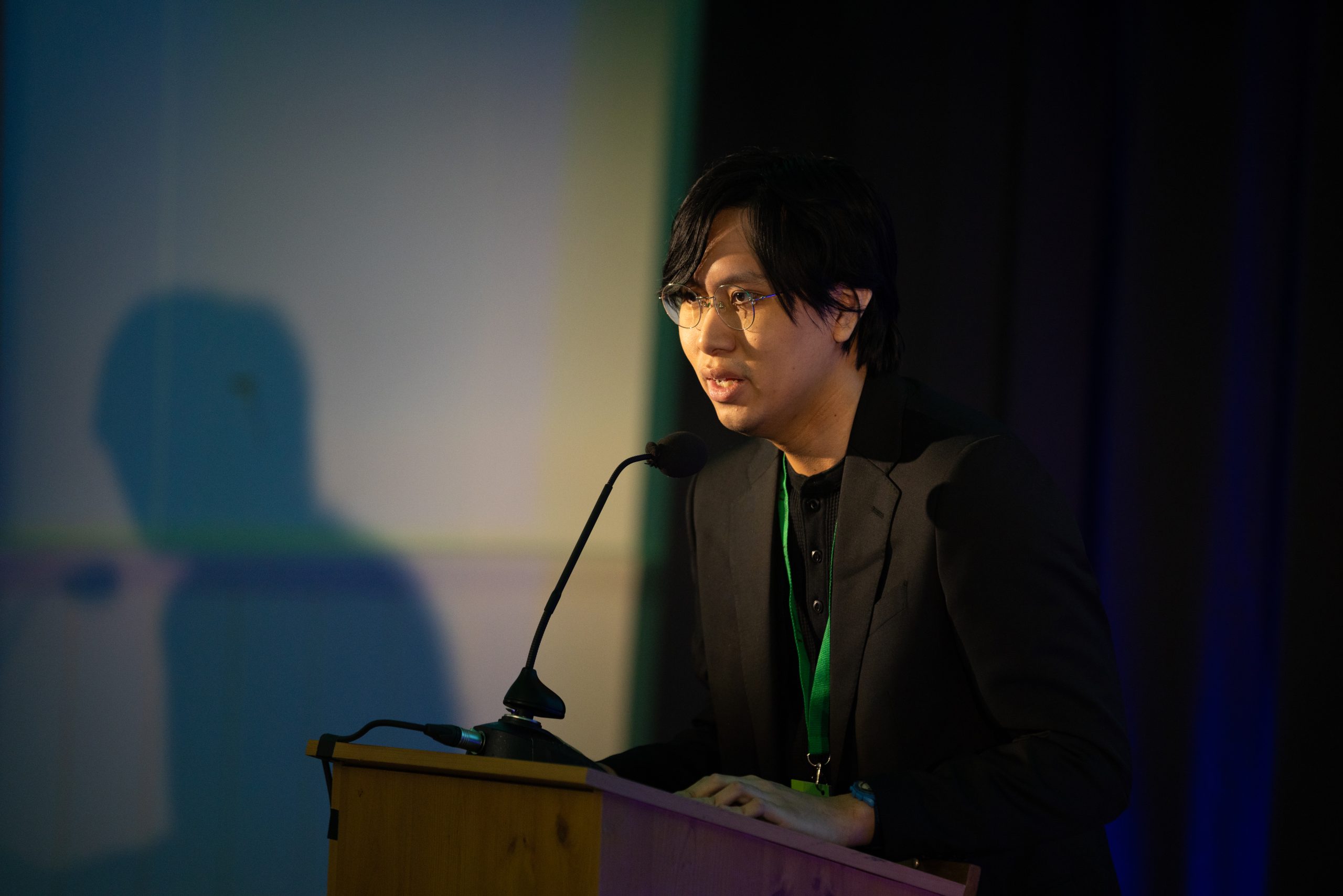
Waron “Teak” Maneenetr
Waron “Teak” Maneenetr is our current 2025 Global Winner in the History category from the University of Hong Kong
Read his published Global Winning paper on “Can Siam Be Reformed Through International Spaces? Venues of Personalized Modernity and Self-Discovery” for the History category in our library.
How does it feel to be a Global Winner?
I think it feels very surreal. First of all, to be surrounded by many people who are very passionate about what they are doing, who give their lives to their work. And I’m proud of them just to be one of them.
What was it like when you were told that you were a global winner?
For me, I never look at this as an individual achievement, but for the people who were behind this work. My supervisor, Professor David Pomfret and all the staff in the department supported me a lot. For me, this was bigger than just myself, but it was a victory for my home university.
What is your thesis on?
The title of my paper was “Can Siam be Reformed through International Spaces? Venues of personalized modernity and self-discovery”. It’s all about the treatment of Chinese princes who went abroad to study. The foreign perceptions of Siam were very important at the time.
These princes went away and showed that Siam was more competent than people believed. They eventually came back with their own ideas, forging their own trajectory. It challenges the previous narratives of cultural assimilation and Western continuity.
In what ways does it challenge Western culture?
Some literature would portray these princes as being Westerners. They have gone abroad and they have become westernized. They would not be considered Thai anymore. Then there is the other part of the traditional literature where these Princes were still like the followers of the father King Chulalongkorn and they remain Thai.
What I challenge is that it is a bit of both. It is the fact that they have Western elements and reject some Thai elements of themselves. As they mature, they don’t take anything for granted. They have to see it for themselves, believe it for themselves, and just go for it.
Do you feel like that’s how you approach your life?
Yes exactly. In 2021, I was the only Thai person in HKU Faculty of Arts and going abroad was a huge challenge. Surrounded by very smart people. And in the first year, I struggled a lot. I got a lot of B pluses in my history essays. I took this feedback back and I got advice from many of my professors. In particular, Professor John Carroll and Professor Watson as well as many other great professors, who actually helped me eventually become who I am. The final line of my essay is that international spaces are not a site of contestation. It is actually a site of self-discovery, just as a prince who discovered himself. I also look back at myself. I also discovered myself.
Do you think events like The Global Undergraduate Awards Summit are important for that sense of self-discovery?
The event is great. It’s not just a title for me. What’s more important is the journey, dedication and passion. Believe it or not, for the past year, when working on this project, I would commit all of my time to work on this. I joined zero societies. I rarely hung out with friends. All my time was just to commit to this so that I wouldn’t let my supervisors and my university down.
What’s next for you?
For me, my life. It’s about giving back to the people who mean a lot to me. Winning the GUA means I have already successfully given back to my home university. Right now, what I want to do is I want to give back to my parents by doing well in my master’s and obtaining the scholarship for the Thai National Bank.
What would you say to someone who was thinking about applying to the Global Undergraduate Awards?
I would say not only go for it, but if you really want it, you have to give your life to it. If you want to do something, put effort into it. All the people I met here, I can sense that they really care about what they’re doing. They’re passionate about their subjects. I’m sure they are going to become successful people in the future.
Don't underestimate your potential and don't underestimate your abilities. Just try [and submit]. You have nothing to lose.
Bryen Isaac Chen Tze-Yang, 2025 Double Global Winner for Art History & Theory and Literature Categories
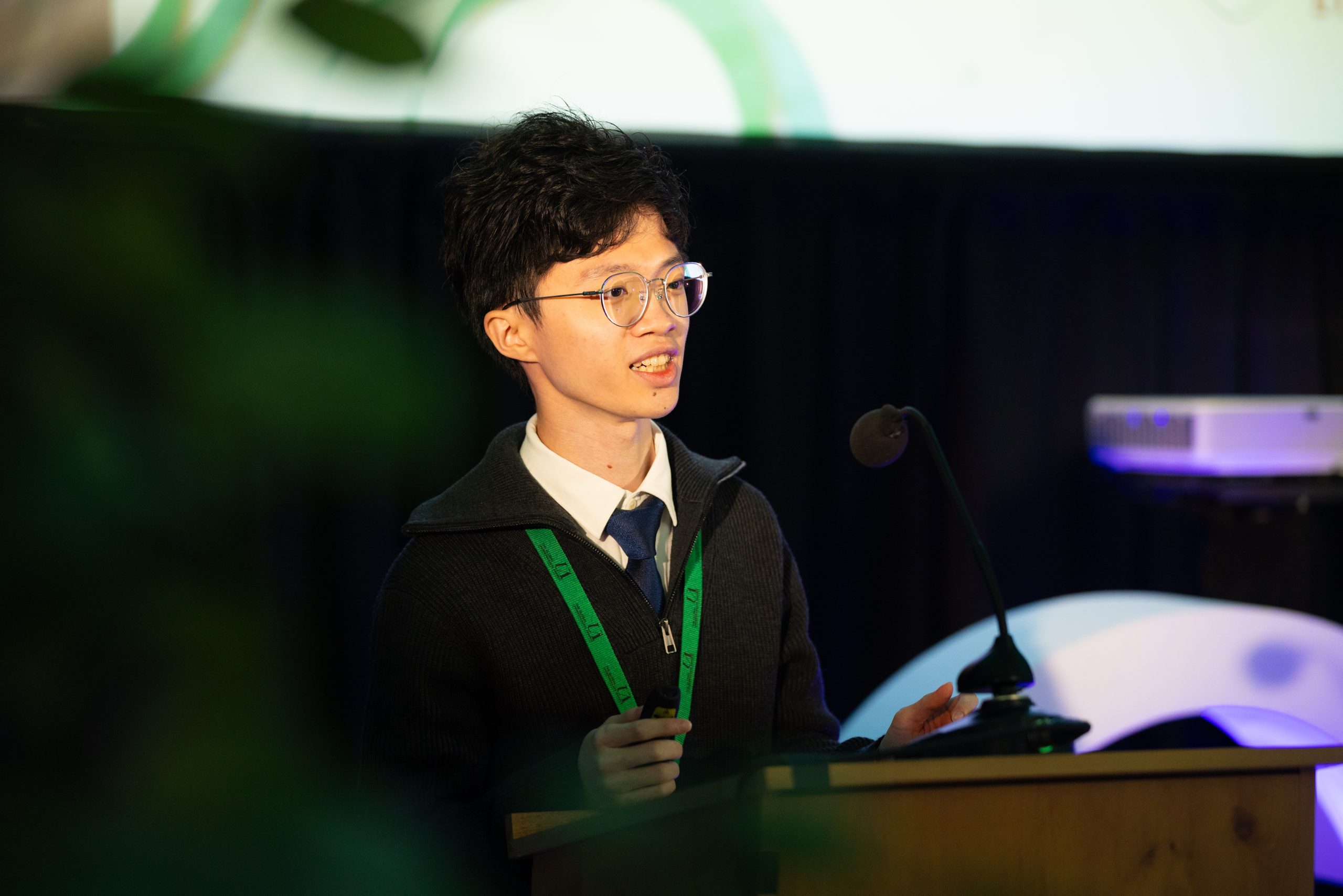
Yong Jian Ng
Yong Jian Ng is our 2025 Global Winner for Computer Science from Nanyang Technological University.
Read his published Global Winning paper on “Modeling Neural-Behavioral Dynamics in C. elegans with RNN-Based State Space and Video Generative Models” for the Computer Science category in our library.
How does it feel to be recognised as a global winner?
I’m very surprised because when I submitted my work, I didn’t really expect that it would be the global winner. I thought highly commended at most. I’m quite surprised that it was chosen as the global winner.
What inspires you about your work?
What inspires me about the work is the professor. I was attracted to work with this professor for a few years. I was applying for various internships and this professor’s name appeared frequently. So I thought, maybe I want to work with this professor on her project. So I approached her and said I want to work with you. She suggested a few projects and eventually we landed on this one.
What has it been like to meet other winners at this event?
It’s eye-opening to see people from other fields, especially. There are a lot of people who are not from STEM fields. It’s fresh to learn about their perspective, their culture and the way they see things. I’m from a very technical degree. When talking to people from different degrees, I feel that we see certain things from different directions, a different angle and we have different understandings. In university, I do have friends from other degrees, but normally you don’t spend as much time as them. As compared to this event, I was in the same room with people from history and philosophy. I don’t have these kinds of friends inside my circle.
What does the future hold for you?
I am lucky to receive a return offer from my internship company. At the same time, I’m applying for part time master’s program and I’ll see if I continue to like the work. If I feel that I want to go back to academia, I will. That was previously my dream.
Why do you think events and summits like the Global Undergraduate Awards are important?
I think that this event is important. There are a lot of top conferences, regional or even globally. But not everyone will have the opportunity to publish in those conferences. Of course, they are good, but it’s like it can be slightly harder to publish in those conferences, to get the exposure, the experience and the connections to be part of those conferences.
This is an open event, an opportunity for everyone, from different backgrounds, to submit your work and get recognised and have the opportunity to experience what a conference is like. It’s great that your work is recognised.
What would you say to someone thinking about applying to the Global Undergraduate Awards?
I would say just go ahead and submit. Define your work a bit, make it more formal academic style and learn about candidate writing and find your profs and get some ideas and suggestions from them.
What do you think of Dublin?
It’s a beautiful city. I don’t see a lot of skyscrapers here. But in general, the feel of the city is very friendly. I like the architecture of the buildings and the streets and the public transport system. It looks like everything is just very nice. Yeah, and yesterday I went to Grafton Street in the afternoon. The culture is just like very nice and welcoming to a lot of people.
