
GUA News: From Passive Giving to Global Impact
Our chair Jim Barry talks to Philanthropy Ireland on giving and the importance of the GUA
April 15, 2026
by Diane Nolan

Every career begins with ambition. But over time, the most meaningful journeys are shaped not just by success, but by how that success is used.
For many of our readers at the beginning of that path, the idea of “impact” may feel distant right now. Yet, as our Chair, Jim Barry’s story shows, the foundations for it are often laid much earlier than we think, and through the opportunities we take and the ideas we choose to back, including initiatives like the Global Undergraduate Awards something less obvious begins to take shape, How you choose to have impact.
In a world where need is vast and resources are finite, that level of focus and intentionality is something that endures.
Jim Barry, Chair of the Global Undergraduate Awards
There comes a point in many careers where success creates space, not just for reflection, but for responsibility.
For Jim Barry, Chair of the Global Undergraduate Awards, that moment marked a shift. Not towards more activity, but towards more intentionality.
Speaking recently on the Philanthropy Ireland Podcast, Jim reflected on how his early engagement with philanthropy was shaped from a young age.
Growing up in Ireland, he describes a culture where giving is embedded in everyday life, through local events, school initiatives and community action. It’s something he says is distinctly Irish in character, yet widely recognisable to many of us from our own upbringing.
As his career progressed, so too did his approach to giving. It remained broad and well-intentioned, but largely responsive- supporting good causes, backing initiatives that resonated and contributing where possible.
Over time, however, he began to question whether that approach was enough.
The turning point came with a series of more deliberate questions: Where can I have real impact? What initiatives are not just worthwhile, but truly transformational? And where can I contribute not only capital, but also time, expertise and belief?
This shift – from passive donor to active participant – would ultimately shape his involvement in what has become one of the world’s leading undergraduate awards programmes.
There comes a point in many careers where success creates space, not just for reflection, but for responsibility.
Jim Barry, Chair of the Global Undergraduate Awards
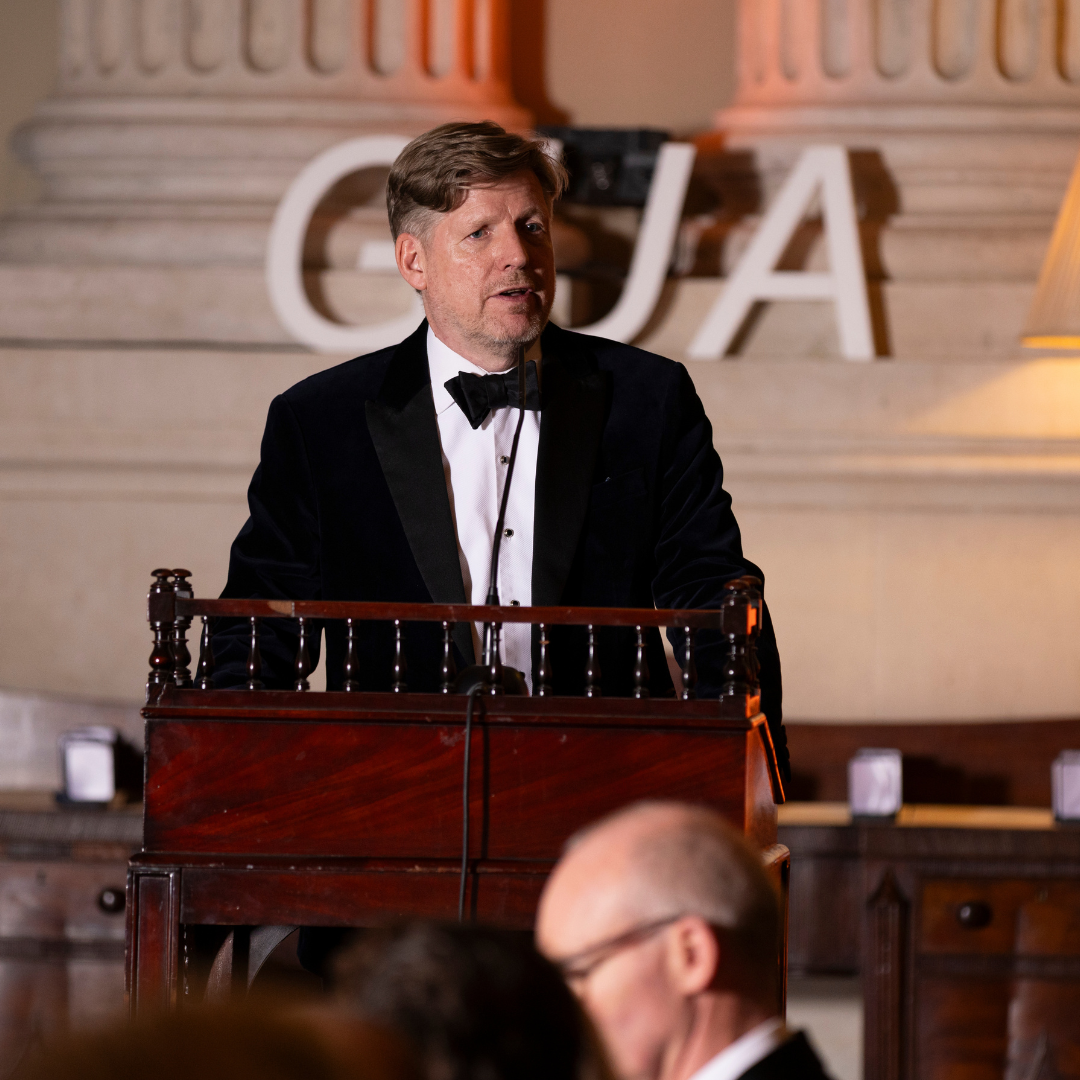
An Idea with Global Potential
In 2008, Jim was approached by two young entrepreneurs with a simple yet ambitious idea – to recognise the world’s most promising undergraduate students and their research.
That idea became the Global Undergraduate Awards.
At the time, it was both entrepreneurial and expansive in its ambition. It sought to address a clear and often overlooked gap…
That exceptional undergraduate work frequently goes unrecognised on a global stage, despite its originality and potential impact.
For him, the decision to become the founding chair was rooted in a deeper philosophy. This was not simply about supporting an initiative; it was about backing potential early.
The belief was clear, recognising excellence at the undergraduate level could create a multiplier effect—accelerating confidence, opportunity and ambition among high-performing students at a critical stage in their development.
From Programme to Platform
Since its inception, the Global Undergraduate Awards has grown into a truly international platform.
Today, the programme attracts thousands of submissions annually from hundreds of universities across over 100 countries. Supported by a global network of academic assessors, universities, professors and experienced professionals, it identifies and celebrates outstanding undergraduate work across a wide range of disciplines.
More than an awards programme, it has become a global community connecting future leaders, researchers and innovators, and providing them with a platform to share ideas and build networks that extend far beyond their undergraduate years.
At the same time, the Awards play a strategic role in positioning Ireland at the centre of global undergraduate excellence, bringing top students from around the world to Dublin each year for its annual summit.
A Model of Strategic Philanthropy
In conversation, Jim further lays out his journey with the Global Undergraduate Awards and reflects on a broader evolution in his approach to philanthropy.
Rather than viewing giving as a series of individual contributions, he increasingly sees it as an opportunity to build something lasting. Something that creates structure, focus and long-term impact.
Jim sees the key lesson as a simple one, but not an easy one to implement: the most effective philanthropy is not transactional, but structural. It is not about writing a cheque, it is about building platforms, backing ideas and committing to long-term impact.
In a world where need is vast and resources are finite, that level of focus and intentionality is something that endures.
