
Alumni Spotlight : 2025 Global Winners Interviews
In Conversation with Angel Yee Fong Au & Masudu Khan.
June 2, 2026
Hear from two of our previous Winners as they reflect on their experience at the Global Undergraduate Awards Summit goals for the future and the transition between being a winner and becoming a judge.
In conversation with interviewer and videographer, Greg Purcell.
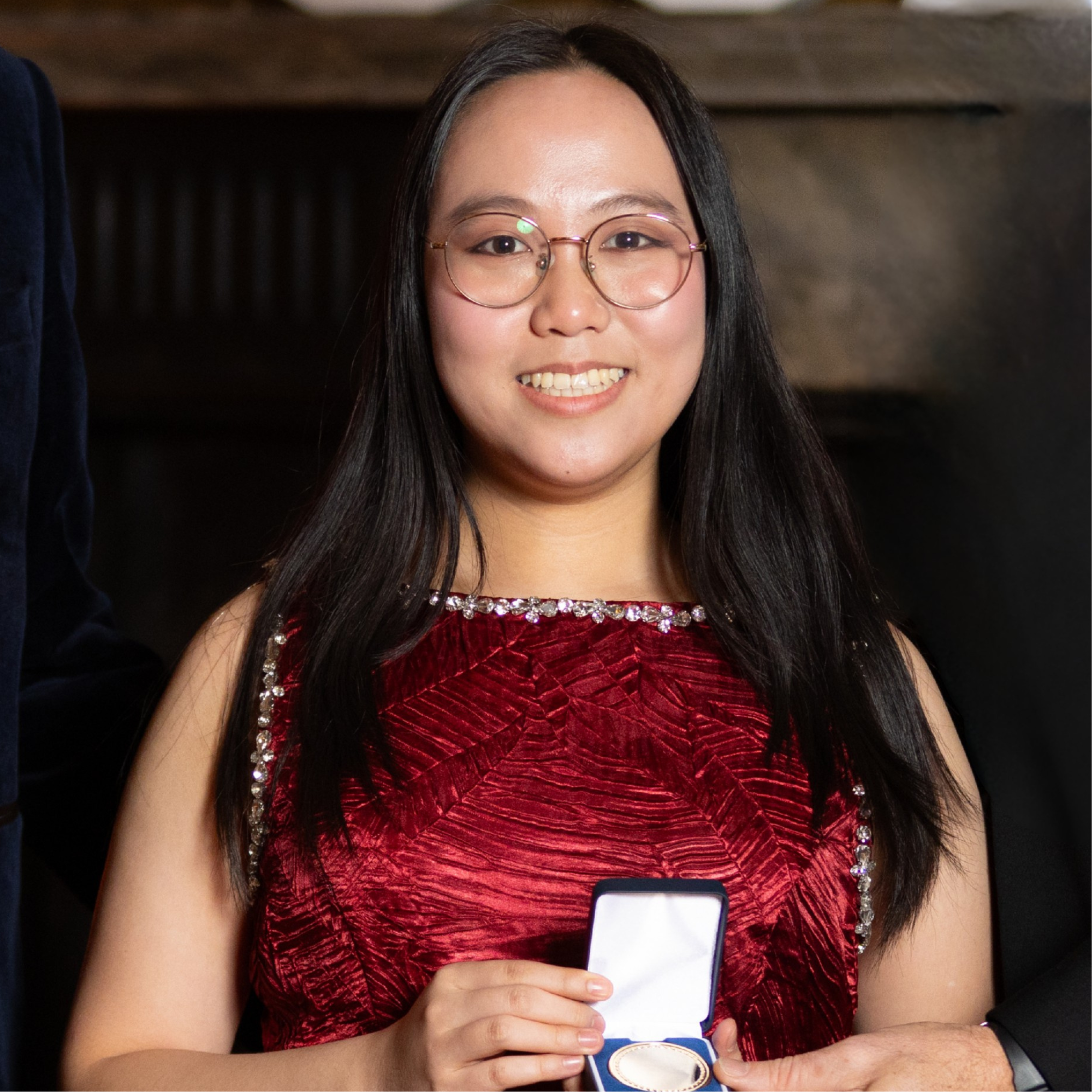
Angel Yee Fong Au
Angel is the 2025 Global Winner for the category Psychology from University College London.
Read her award-winning paper on “Winning Paper: Reverse Psychology Marketing: Further Supportive Evidence from Environmental Charitable Donation” in our library.
Tell me a little bit about your presentation.
My paper was about reverse psychology in marketing. Most advertising focuses on why a product is good, why it’s popular, or why you should buy it. I looked at what happens when brands do the opposite, using messaging like “don’t buy this” or highlighting negatives in a way that captures attention. I found that counterintuitive approach really interesting and wanted to explore it further.
That’s fascinating. There must be lots of real-world examples of that kind of anti-marketing. Do you enjoy living in London?
Yes, I do. I’ve been there for almost five years now.
What part of London are you in?
I live in central London.
And you’re not originally from London?
No, I’m originally from Hong Kong. I moved to London to study.
How does it compare?
Hong Kong is much hotter, and people are generally very ambitious. I really like life in the UK because there’s more of a work-life balance. It’s cooler, and although it’s rainy—similar to Ireland. It suits me well.
What has the experience been like over the last few days? How does it feel to be a global winner?
It’s been amazing. But honestly, I don’t think it’s just about being a global winner—I think everyone here is a winner. All of us have done meaningful work at undergraduate level, even if we don’t always think of it as something that deserves recognition.
The fact that there’s an award that takes the time to read student work and celebrate it, whether global winners, regional winners, or highly commended entrants is really special. I think all undergraduate research deserves recognition, no matter the subject. This event creates a platform for people from different disciplines to come together and share their work.
Have there been any moments over the last few days that have stood out?
Definitely. Through talking to others, I’ve realised how much incredible work people are doing that you’d never otherwise hear about. One winner created a campaign addressing gender-based violence at their university. I run a mental health charity myself. Other people have started organisations or built projects in completely different fields.
Bringing together people from across the world means you can connect, share ideas, and maybe even collaborate years down the line.
What would you like to do in the future?
I co-founded a mental health charity called Overcome That, which provides free online mental health coaching globally. I want to continue building that.
At the same time, I’m applying for PhD programmes, particularly to build the evidence base for our coaching programme and to develop online interventions for autistic adults. My focus is making mental health support more accessible, especially for people in low-income countries who may never receive a diagnosis or access the help they need.
I’m still exploring exactly where that path will lead, but research is where I see myself for now.
What would you say to someone thinking about applying for the Undergraduate Awards?
Just apply. I submitted my work on the deadline day, and I’m actually a returning applicant. Last year, I received regional recognition for one of my psychology papers. This year, I looked through my coursework and thought, “I have something I could submit, why not?”
It’s not a difficult process, and even beyond the award itself, it gives your work another life. It’s not just a grade on a report card anymore—it becomes something you can share and be proud of. So I’d absolutely encourage people to go for it.
Would you apply again next year?
Probably, if I could trim one of my papers down to the word limit. Some of my recent work is a bit too long, but if I can make it fit, I’d definitely consider it.
What does your work mean to you?
Interestingly, my winning entry was actually from the first year of my degree. Looking back, it shows how much I’ve grown as a researcher over time.
By the end of my degree, in my fourth year, I had independently run a randomised controlled trial linked to a procrastination programme through my charity. That’s the kind of project you’d usually expect doctoral or postdoctoral researchers to lead, but I was able to do it as a master’s student.
That progression has been really meaningful to me. It’s shown me how much I’ve developed, and I’m grateful to the supervisors who supported me along the way. My advice is simple: if you have an opportunity, take it. Apply for awards, pursue the research that interests you, and make the most of every chance to share your work.
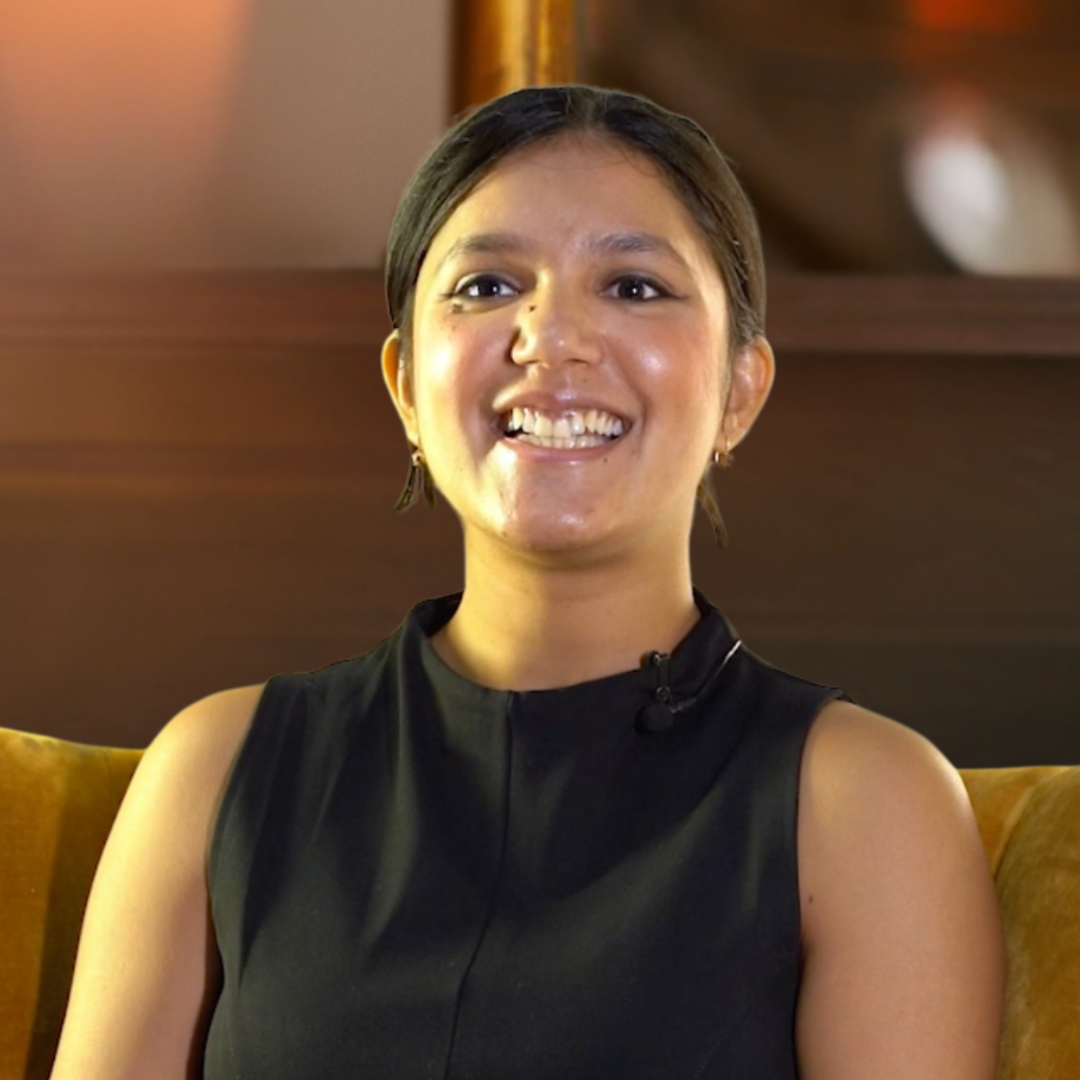
Masuda Khan
Masuda Khan is our 2021 linguistics Asia regional winner from BRAC.
She now is a judge in the same category. Her undergraduate field was English, but she’s currently doing a master’s in Translation, Innovation and Sustainability Environments.
Read her award winning paper “CDA on the Rohingya Crisis: Yunus vs Suu Kyi” in our library.
That’s quite a lateral move. How has the transition been from English into that programme?
For me, this programme fits like a glove. Back in Bangladesh, I worked across multiple mediums, and this course draws on economics, social sciences, cyberculture and more. It’s interdisciplinary in a way that really suits me. I’m studying in Europe on a scholarship from the EU, and it’s been a wonderful experience. I really love my subject.
Where are you studying?
That’s a slightly tricky answer, because the programme is spread across four European universities. In Dublin, I studied at University College Dublin.
I did my undergrad in English at UCD too.
Really? Then high five for that.
Why do you think events like this are important?
I think they show you your own potential. When I won the award, I realised something about myself. Before that, I didn’t think I was an especially strong student. I knew I was doing okay, but I didn’t see myself as exceptional.
Receiving the award made me think, actually, studying is something I’m good at. It gave me confidence in a way I hadn’t expected.
How did that change you?
I should clarify I was a regional winner, not a global winner. But it was still one of the happiest moments of my life. I won Best in Asia for linguistics, and it made me believe more in my own capabilities.
I had failed my A-levels, and I was never the top student in class. I wasn’t the kind of person people looked at and thought, “wow.” But the paper I wrote was something I felt deeply connected to while writing it, and seeing that recognised made me incredibly happy.
It’s interesting when something you create so personally ends up being recognised. Maybe it’s because you’re being true to yourself.
I think so, yes.
Has that made you recognise those moments more?
Definitely. I’ve realised that whenever I create something from the heart when I’m truly in a flow state those are often the moments that lead to meaningful outcomes.
That’s happened in many parts of my life, including being here now in Europe on scholarship. When I’m fully immersed in what I’m doing, things seem to align.
What does that flow state look like for you?
It happens when I’m creating something out of my own observations. I’m very inspired by my surroundings. I love painting, and I love writing academic papers, and in both cases I feel that I’m making something meaningful from what I see around me.
It’s a kind of dialogue between creativity and the environment. I feel like the world is speaking to me, and I’m responding through whatever I create. It’s a really beautiful meeting point.
What has it been like to be a judge this year?
I’ve been a judge for the last four years, and every year around May I get excited because I know the papers will be arriving soon. I genuinely look forward to reading them.
That’s why I keep coming back. It’s exciting to see research from so many different parts of the world and from subjects I would never otherwise encounter. I’ve learned so much about the world through the judging process.
What’s one paper that stood out to you this year?
One paper I really enjoyed was about supermarkets in Singapore and how language changes depending on the setting.
The author looked at how people speak in very local supermarkets versus supermarkets near luxury hotels. In the more upscale locations, staff and shoppers suddenly switch to very formal language—using terms like “sir” and “madam.” It was such an interesting way of looking at language and class through everyday interactions.
This year was actually very hard to judge because the standard was so high. The competition was incredibly strong.
What would you say to someone thinking about applying for the Undergraduate Awards?
Just apply. I know many of my friends who were too afraid to apply because they were worried about rejection.
But rejection shouldn’t stop you. You never know what might happen if you don’t try. The worst they can say is no.
And even then, an award does not define your worth. You should know your own power regardless. Just keep creating, keep writing, and trust in the work you’re doing.
