
Alumni Spotlight : 2025 Global Winners Interviews
We chatted to Emilia Herdes, Rachel Wee and Maria Cooper on their 2025 wins
May 4, 2026
We recently caught up with more of our 2025 Global Winners to hear about their experience with the Global Undergraduate Awards.
From the inspiration behind their prize-winning papers to why they think other students should apply for The Global Undergraduate Awards. They discuss their work, the importance of undergraduate research and being celebrated. All in conversation with our interviewer and videographer, Greg Purcell.
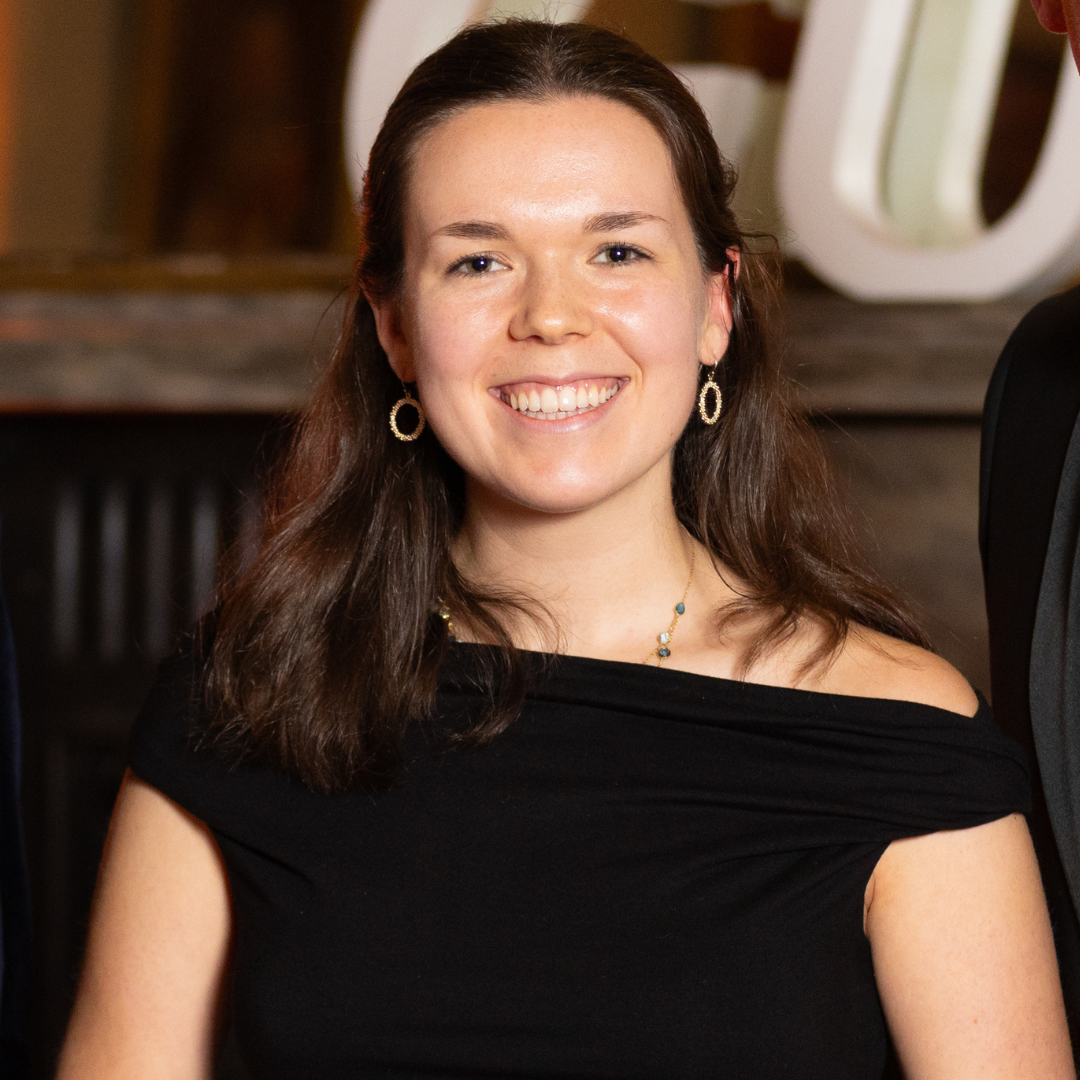
Emilia Herdes
Emilia is the 2025 Global Winner for the category Medical Sciences from Brown University.
How does it feel to be a global winner?
I feel very honored. Very grateful for the opportunity. And I think it really just reflects the amazing lab environment that I got to be a part of and the amazing mentorship that I received.
How does it feel to be here at this event?
It’s great. I’ve never been to Ireland before.Dublin is such an amazing city. I’m here with so many great people. It’s been a really great time.
What surprised you about your time here?
I’m so surprised by the kindness of everyone here. The amazing organization of this event. The many opportunities to connect with so many different people that are also talented. It’s been really great.
Amazing answer. Why do you think events like this are important?
I think they’re very important. One of the unique aspects of this event is that it brings together people from so many different disciplines. I’ve talked to so many people in different areas that I usually do not interact with. I think that’s a really important part of the summit to encourage cross-disciplinary conversations.
Is there anything that stands out to you that you’ve heard over the last two days? Any conversation, bit of information, new waves, new perspective?
There really have just been so many presentations, a lot of them talking about different things, studying different cultural effects, different philosophical, conversations that really amaze me. So many dimensions and areas that I usually do not think about. So it’s been so great to learn about these areas.
Me too. I’ve been filming this since late 2018 and the sheer vast wealth of knowledge. It’s amazing! I’m out of college for around 15 years and it’s so rare to have these moments and to be surrounded by such a plethora of different distinctions and different people.
It’s really unique to be able to have that opportunity to engage with so many people from different disciplines. It’s really hard to get that in many other mediums. So it’s really amazing.
What have you learnt over the last few days?
I’ll think more about that when I have some more time for reflection. I think I’ve learnt a lot from hearing people’s research in different disciplines, even different analyses of literature. As someone who loves to read, I found the topics that were discussed really interesting and I think just little things like that, I’ll continue to carry forward with me, throughout my life.
What would you say to somebody who was thinking about applying to The Global Undergraduate Awards?
There’s nothing to lose. It’s really simple to apply. It’s a great experience to be able to attend this event. It’s very exciting.
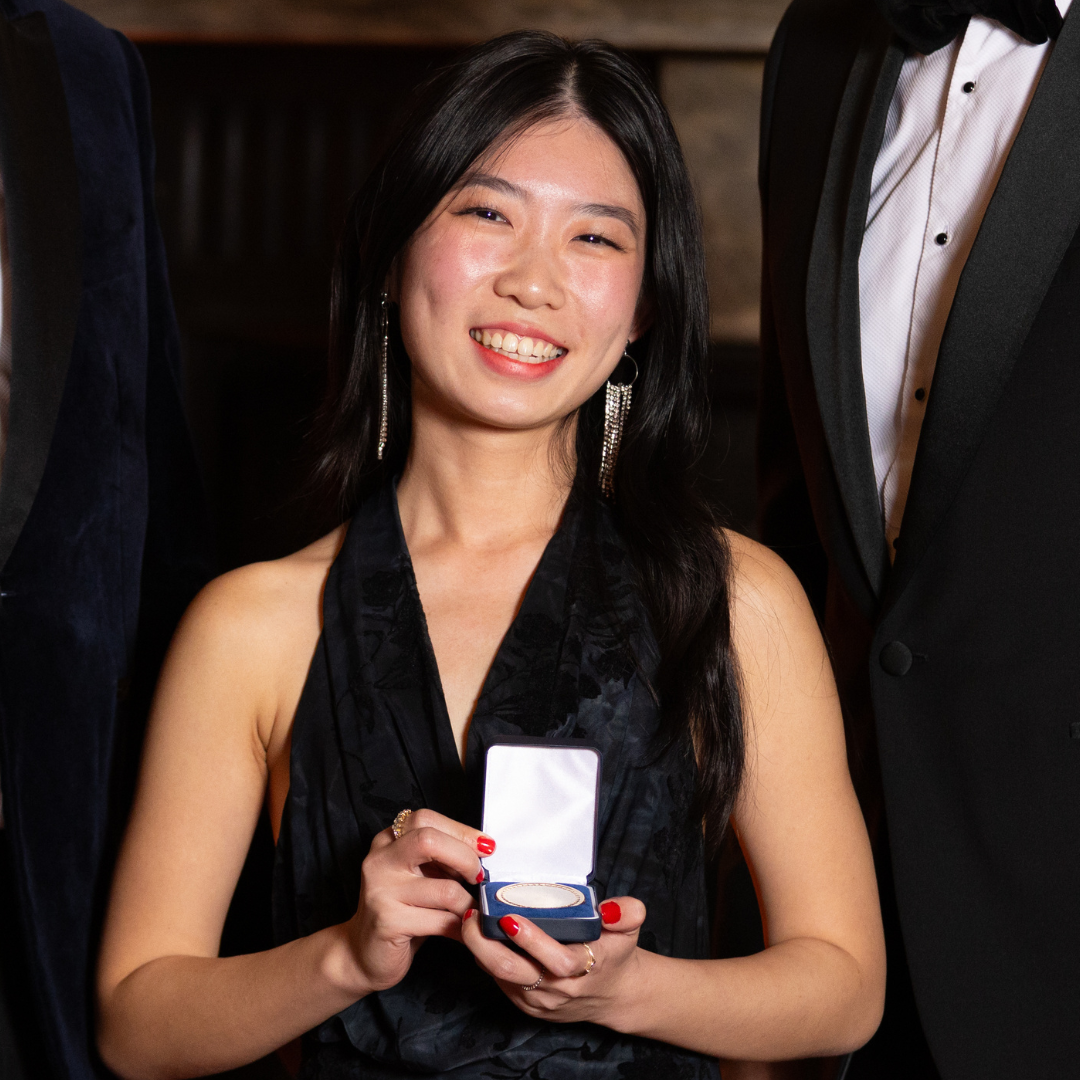
Rachel Wee
Rachel is the current 2025 Global Winner for the category Linguistics from Nanyang Technological University
Read her award-winning paper on “The Waves Carrying The Waveforms: The Tones of Sarawak Hokkien and Its Cross-Peninsular Relation to Penang Hokkien” in our library.
How does it feel to be recognised as a global winner?
It feels surreal.The paper that I submitted was my bachelor’s thesis, which I was working on while I was doing a full time internship in Singapore. So I was doing working a 9 to 5, Monday to Friday. And on top of that, writing my thesis.
I was really just trying to get through the whole process and submit it I was hoping to do well. So to have it be recognsed on such a global stage, it’s unreal.
How long have you been in Dublin?
I arrived two days ago.
Have you gotten to see much of the city?
On the first day I arrived, before the summit started I was roaming around alone and it was pretty cool. I did feel like a dumb tourist not knowing what was good or where to go! The companion we were given gave me a lot of insight into Ireland and what I should see.
What did you see?
I saw the Temple Bar and a few churches which are really beautiful.
What’s surprised you about the summit?
I think what surprised me is just the the huge, diverse range of fields that that people come from. I was watching the presentations today in awe of everyone’s interests. I’m such a big fan of everyone who’s presenting! They’re so smart and they have such passion for what they research. It’s incredible!
What was the title of your of your thesis?
So it was, the full name is “The Waves Carrying The Waveforms: The Tones of Sarawak Hokkien and Its Cross-Peninsular Relation to Penang Hokkien”.
That’s so interesting. How do you think your work has changed you as a person?
I like that question. What sparked my research was my reflection on my own identity.
I grew up in Singapore to parents who are from Malaysia. To give context, immigrants from Malaysia to Singapore are most often from West Malaysia.
Singapore is basically the southern part of Peninsular Malaysia. But my parents are from the other part of Malaysia, which is across the ocean in the east. Some Singaporeans don’t know about this part of Malaysia, which is funny. I realised the type of Hokkien, which is the language that’s spoken by my parents, is different from what’s spoken in Singapore.
This variety of Hokkien is something that’s very close to my heart. So whenever I visit my family back in Malaysia, in Kuching, I would hear my grandma, my aunt and uncle speak Hokkien. That’s where I really feel like, you know, a sense of belonging and home. That’s not something I would get much of in Singapore.
That’s why I wanted to get the word out there. There’s this other type of Hokkien that exists across the ocean in the other part of Malaysia.
So self-exploration?
Yeah. Essentially. It’s not that I love being married to academia. It takes a lot of dedication to be a global winner.
What does it feel like? How do you think being acknowledged as a global winner might change or impact your life?
I’ve been thinking about this a lot, actually. Since I graduated, I’ve been thinking, what do I want to do in the future? Do I go into corporate or do I go into academia? And I think winning this award is kind of an affirmation of my abilities, my research ability. Although I still have this constant debate within myself, academia or corporate. But I feel like this is a step closer. This brings me a step closer to academia. If I managed to be the global winner in this category, then maybe that’s a sign that I should pursue it further.
Yeah, definitely. And. If you were to talk to an undergraduate who was thinking about applying to the Global Undergraduate Awards, what would you say to them?
Go for it. There’s nothing to lose. I love that it allows us to submit a piece of work that you’ve already done because we are all really busy students. If we had to come up with something new, that would be a struggle. It’s amazing that we get to submit the work that we’ve already completed.
Amazing. What’s an experience you’ve had at the summit that stands out?
I think the ability to network. I don’t really like that word, but the ability to make friends with people from all over the world. I think it’s been super interesting.
There are two layers. Where are you from? That opens up a whole world of conversation. What is your culture like? Especially for a linguist like me, so what’s your language like? What languages do you speak? Tell me something about your culture. I think it’s been super fun.
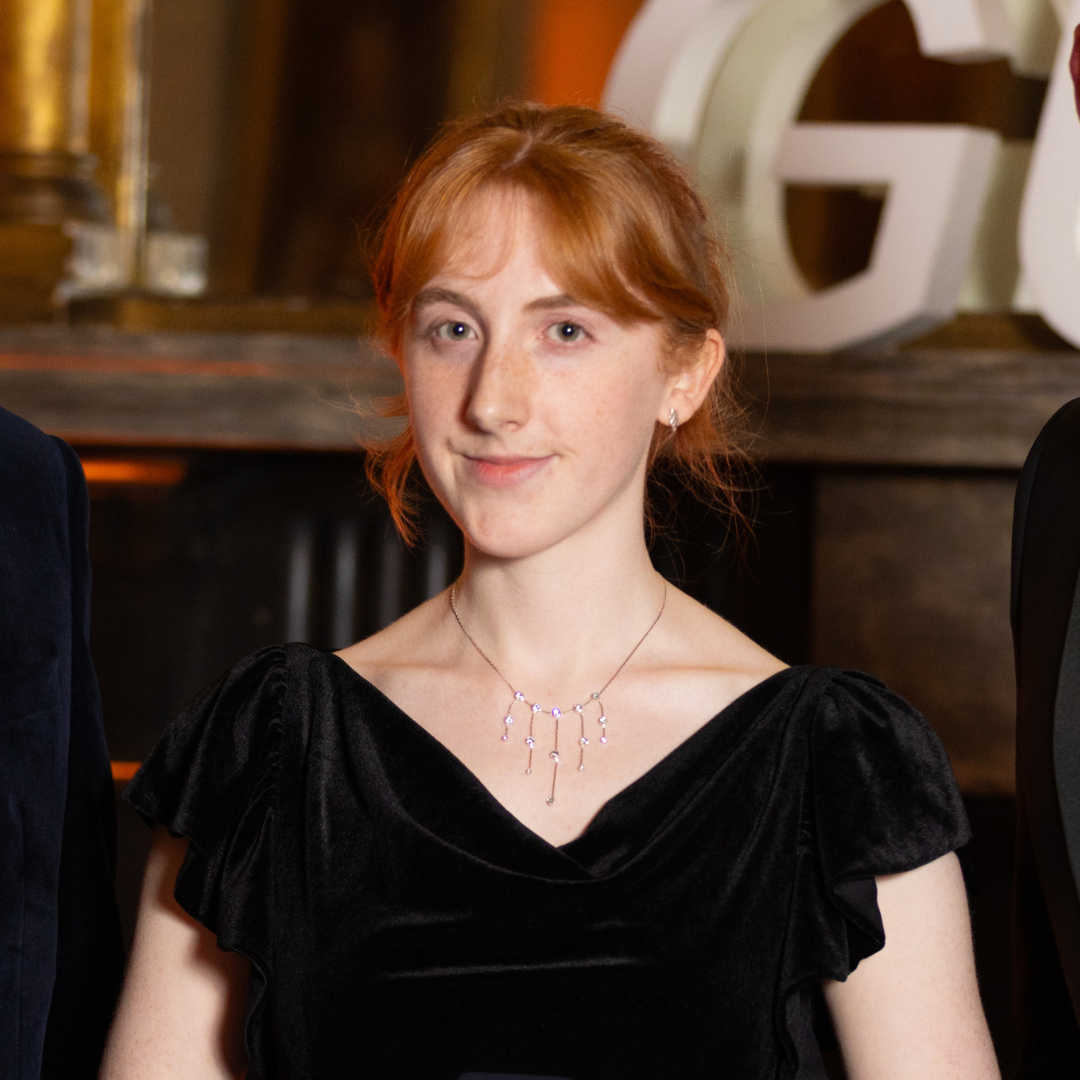
Maria Cooper
Maria is the current 2025 Global Winner for the category Earth & Environmental Sciences from Trinity College Dublin.
Read her award-winning paper on “Investigating the Feasibility of using Nature-based Solutions for Flood Management in Mogeely, Ireland, and Beyond” in our library.
Tell me about the Presentation you gave about your Winning Work
My presentation was about my undergraduate dissertation, which looked at how we can use nature-based solutions to managing flooding in Ireland. I completed the study with my supervisor Professor Mary Bourke, who I worked with previously on part of the Midleton Flood Relief Scheme. Nature-based solutions are a soft-engineering approach to flooding, like planting forests and reconnecting rivers to their floodplains, which can be used in combination with more traditional methods like flood walls.
How does it feel to be recognised by the Global Undergraduate Awards?
It was a huge shock when I got the call. I wasn’t expecting it at all, because I’d applied a few months ago and put it out of my mind over summer when I was working and completing an internship. It means a lot, and it’s really nice to have my work recognised on a global platform.
How have you enjoyed the summit so far?
I’ve really felt very welcomed. Everyone’s been really lovely, and the whole team have been super helpful as well. It’s great to meet so many new people from all over the world and hear about their fantastic research. I’ve really enjoyed listening to everyone’s presentations.
Why do you think events like this are important?
I mean, it’s nice to have all that effort and work recognised. It’s a shame that not everybody can be recognised in such a way, although it’s excellent that they’ve invited the top 10% category, that’s really important. It’s nice to meet like-minded people and share experiences, but it’s also very eye-opening to the scale of excellent undergraduate research that’s happening all over the world.
What would you say to people who are thinking about applying?
I’m sure everyone has said this, but just go for it! There’s really nothing to lose. I think I submitted maybe an hour before the deadline. And, I really quickly, sort of, put it out of my mind and didn’t think about it for a couple of months until I got the call.
The best part was telling my supervisor, she was really thrilled. It’s a recognition of her work too, and I’m looking forward to the dinner ceremony with her.
What’s next?
Oh, I have a job now, I’m working with an environmental NGO called The Rivers Trust. They work with community groups across the UK and Ireland to restore rivers and tackle things like pollution and habitat loss.
The project I’m working on is using nature-based solutions for improving water quality, so not quite flooding but the same type of area that I completed my dissertation on.
I feel very lucky that I’ve got a position that’s directly related to what I’ve been doing for the past year.
