
GUA Alumni: Dara Carney-Nedelman
We caught up with 2019 Global Undergraduate Awards Highly Commended winner Dara Carney-Nedelman to discuss her journey since receiving the award and what's next as she continues to make an impact in higher education.
July 24, 2026
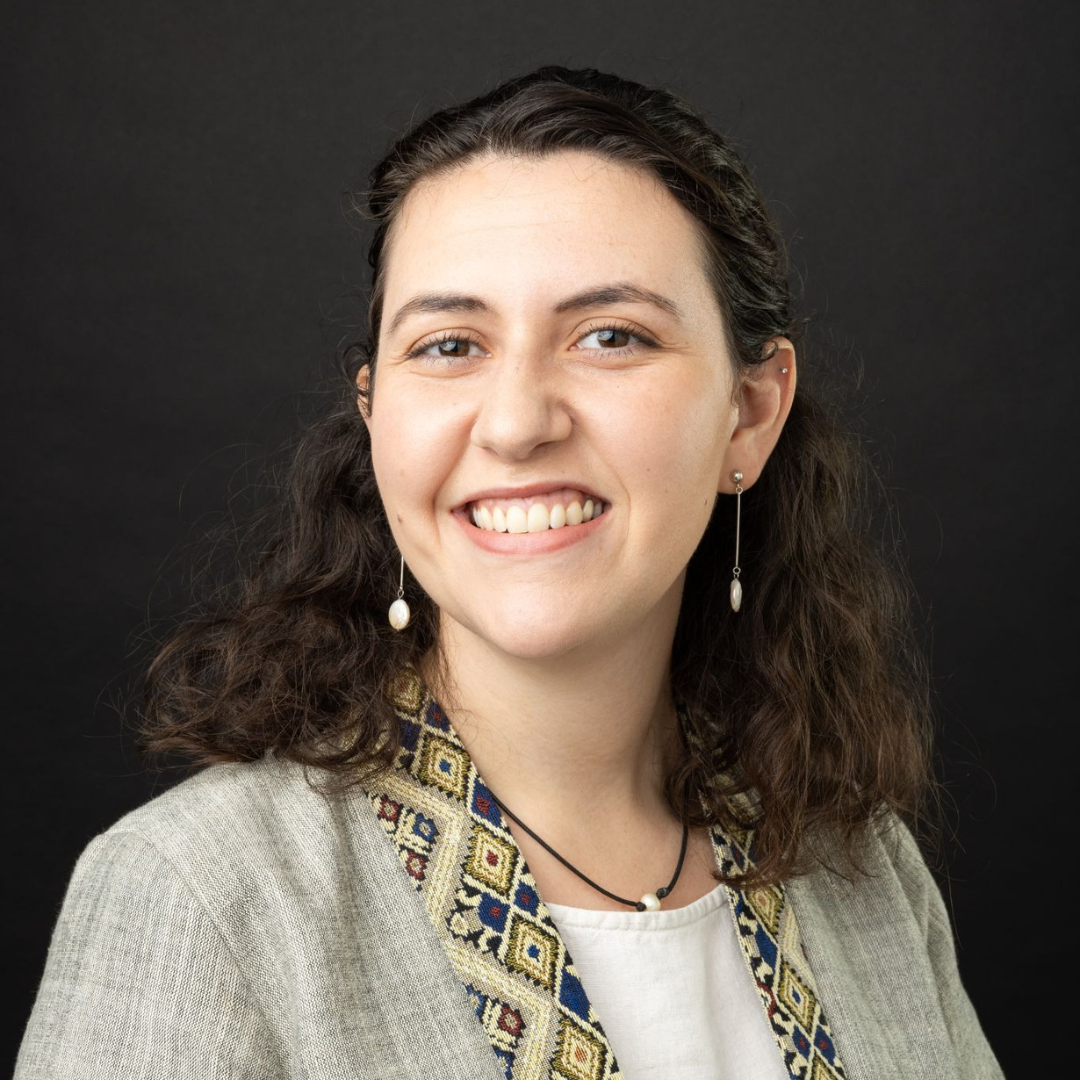
Dara Carney-Nedelman‘s journey since winning a Highly Commended award at the Undergraduate Awards in 2019 exemplifies the power of saying “yes” to unexpected opportunities.
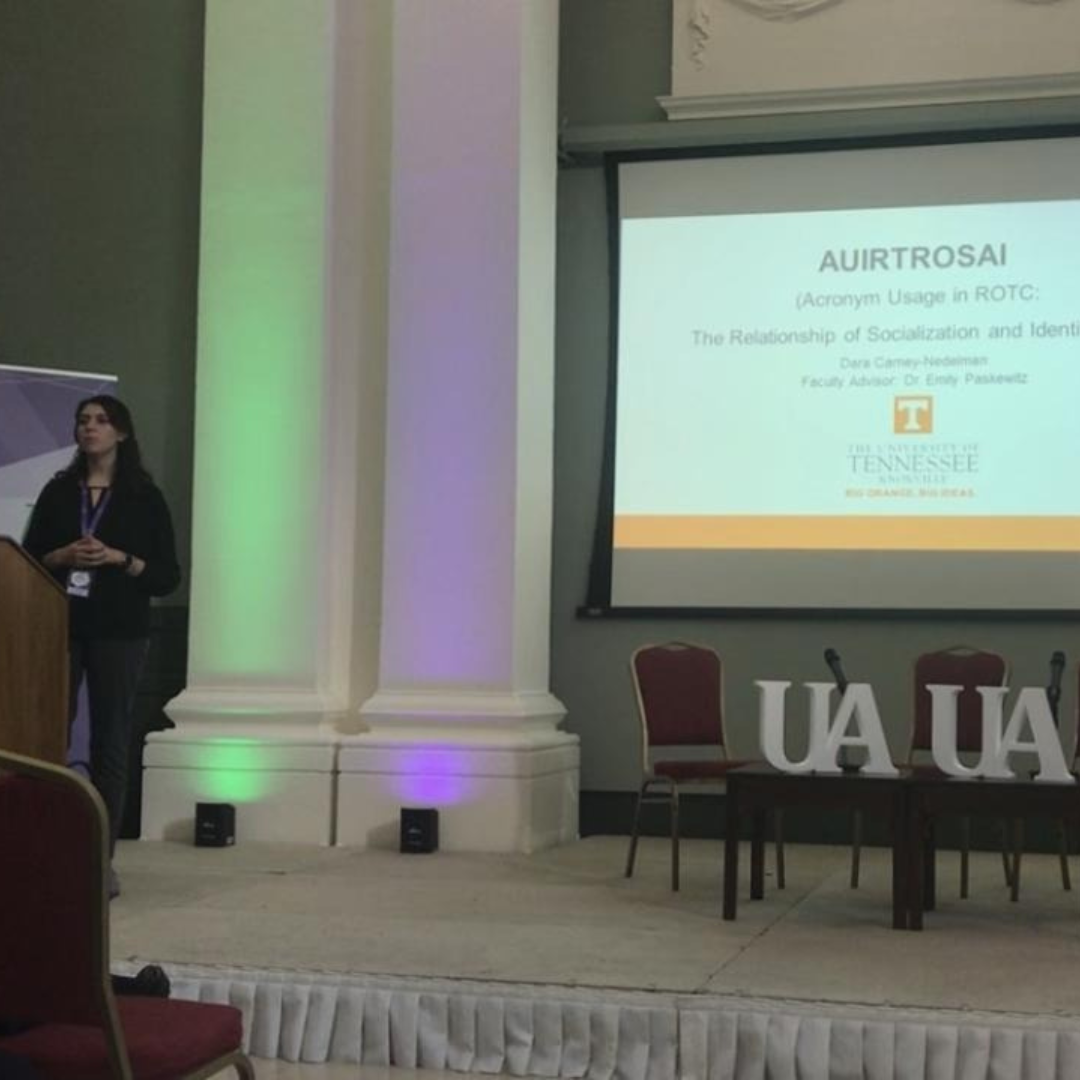
As an undergraduate studying communication studies at the University of Tennessee, Knoxville, Dara submitted her paper “AUIRTROSAI (Acronym Usage in ROTC: The Relationship of Socialization and Identification)” to the Undergraduate Awards, a decision that would prove formative in shaping her outlook on interdisciplinary research and academic communication. Since then, her career has spanned roles as a Communications Specialist for YouthMappers (a USAID implementing partner), a two-year Fulbright English Teaching Assistant at Savannakhet University in Laos, and currently, Assistant Director of Nationally Competitive and Experiential Learning Scholarships at Appalachian State University.
Now completing a part-time master’s degree in Geography while working full-time, Dara is preparing for the next chapter, but perhaps more valuable than any single achievement is the philosophy that has guided her path, “Why wouldn’t you apply? What do you have to lose? “, a mindset she now shares with the students she advises.
In this Q&A, with The Global Undergraduate Award’s Head of Communication, Diane Nolan, Dara reflects on how the Undergraduate Awards experience broadened her appreciation for interdisciplinary research, why soft skills and experiential learning matter more than ever in today’s competitive landscape, and what advice she’d give to students wondering whether to take that leap and submit their work.
Overview
- Dara Carney-Nedelman received a Highly Commended award in the Psychology Category for her paper “AUIRTROSAI (Acronym Usage in ROTC: The Relationship of Socialization and Identification)” from Undergraduate Awards in 2019, while studying at the University of Tennessee, Knoxville
- Since graduating in 2019, Dara has pursued a diverse career path including working as a Communications Specialist for YouthMappers (a USAID implementing partner via Texas Tech University), completing a two-year Fulbright English Teaching Assistantship in Laos, and currently serving as Assistant Director of Nationally Competitive and Experiential Learning Scholarships at Appalachian State University.
- Dara is currently completing a part-time master’s degree in Geography while working full-time, with a focus on air quality research in Laos, and aspires to pursue a PhD and become a professor.
- The GUA experience broadened Dara’s appreciation for interdisciplinary research and reinforced the critical importance of communicating complex ideas in accessible, layman’s terms.
- Dara’s core advice to students is “Why not apply?” — emphasising that the process of applying builds transferable skills regardless of the outcome, and that experiential learning, soft skill development, and strong mentor relationships are key differentiators in a competitive job market.
Diane: When did you win the GUA award, and what is your current professional situation?
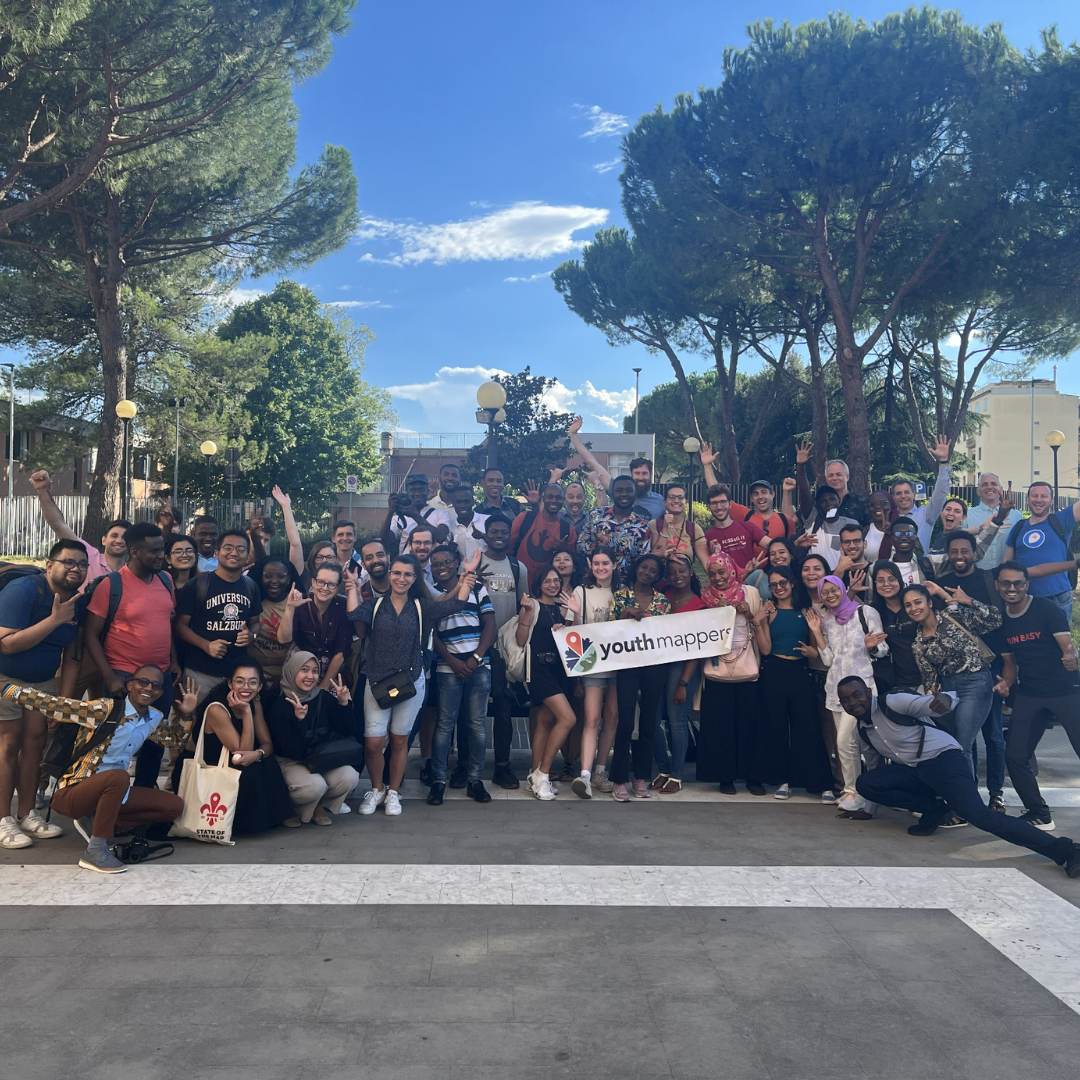
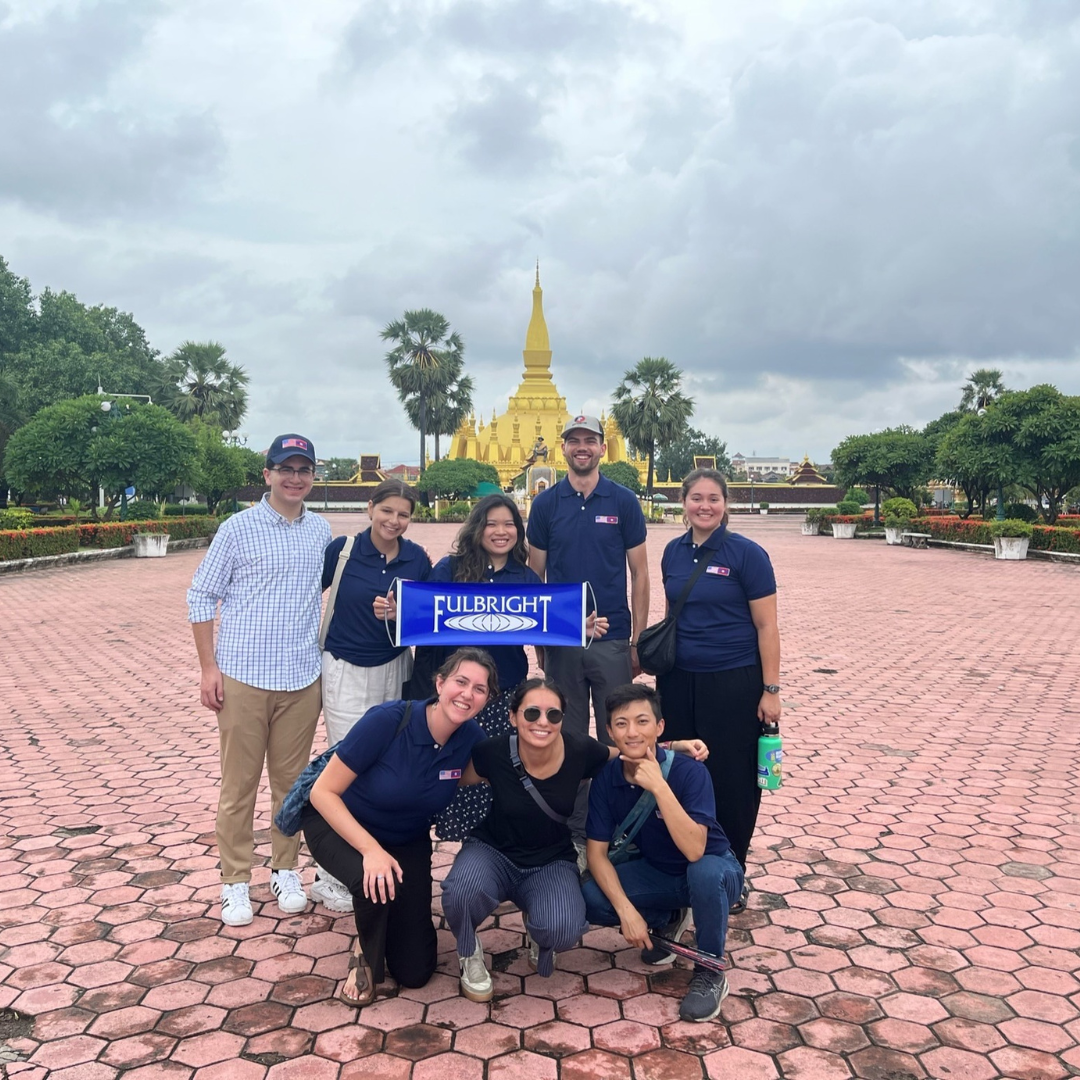
Dara: I was a Highly Commended thesis winner in the Psychology category in 2019, submitted through the University of Tennessee at Knoxville. After graduating that same year, I worked as a Communications Specialist for YouthMappers — a university network operating across 52 countries with approximately 200chapters, employed through Texas Tech University. I then completed a two-year Fulbright English Teaching Assistantship at Savannakhet University in southern Laos, returning to the U.S. in 2024. I am now Assistant Director of Nationally Competitive and Experiential Learning Scholarships at Appalachian State University, advising students on Fulbright and other prestigious fellowships.
Diane: Did your degree and subsequent awards prepare you for your career, and did you intend to follow this path?
Dara: No — I had originally been enrolled in Air Force ROTC for all four years of my undergrad and expected to enter the Air Force, but that did not work out. My current career path emerged through a series of experiential learning opportunities and extracurricular involvement rather than a planned trajectory. I think my current role now reflects the cumulative impact of those varied experiences.
Diane: Did your time in Asia cement your career direction, or was it more of an exploratory phase?
Dara: I would say my earlier role with the YouthMappers university network was what first cemented my interest in higher education — I described the energy of being on a university campus as uniquely motivating. I specifically chose my Fulbright placement, teaching at a university, in order to test whether I enjoyed teaching at the university level. Having confirmed that I did following that programme I continued into subsequent roles and I now plan to pursue a PhD and become a professor, while continuing fellowship advising alongside that role.
Diane: What subject area will you be looking to teach in the future?
Dara: Geography. I am currently completing a part-time master’s degree in Geography while working full-time. During my undergraduate thesis, I examined the interworkings of groups — building on that, my research interests have now broadened to cultures. I am also deliberately developing hard science skills in sustainability, with my master’s dissertation planned to focus on air quality.
Diane: How do the research skills acquired in undergrad and through the application process for the Undergraduate Awards compare to what is needed at postgraduate level?
Dara: My undergraduate thesis used mixed methods, and those foundational skills, including understanding quantitative and qualitative research and IRB training, have made my master’s coursework significantly easier.
Completing my undergraduate research and preparing my submission for the Undergraduate Awards also helped me to acquire much needed skills for prograduate level programmes and it has in turn made it much more straightforward in post graduate thesis preparation. The experience also helped confirm that I genuinely enjoy research and I think this is something I consider essential before committing to a PhD.
Diane: What do you think being engaged in research actually means?
Dara: I define research as completing as aproject driven by original thought, which typically involves some form of data collection, whether qualitative or quantitative, and analysis of that data to produce an independent outcome, but that the output itself can take any form.
Diane: Did receiving the Highly Commended award help you build self-confidence or soft skills?
Dara: For me attending the awards ceremony and Summit in Dublin was the most impactful element of the whole experience. It demonstrated to me how interdisciplinary academia truly is and made continuing in academic work feel more approachable. I was struck by the fact that people from fields such as neuroscience, geography, microbiology and medieval history were genuinely interested in my communication studies research. Moreover, the experience reaffirmed my belief in the importance of being able to communicate ideas clearly, having observed that some presenters had groundbreaking work but struggled to convey it accessibly, while others could break down complex topics into layman’s terms. I identified this communication skill as essential for researchers who want their work to have real-world impact.
Diane: What motivated you to apply to the Undergraduate Awards, and does that philosophy inform how she advises students today?
Dara: By the time I applied to the GUA, I had already applied for the Gilman Scholarship and had not been selected, the Project Global Officer program, that I did secure and was able to travel to Indonesia, and Fulbright, of which at the time had only reached the semi-fina,l so I was already learning about the process of application and that not all outcomes were favourable.
My thesis was already written at that point too, so the UA submission wasn’t much different and the work required relatively minor adaptation to satisfy the process.
My reasoning was simply: “Why not?” I now use that same philosophy with the students I advise, asking them what they have to lose by applying. I also emphasise that the process itself builds transferable skills, such as formatting work for submission and articulating research clearly and that this is also directly applicable to future journal submissions and academic careers.
Diane: What advice would you give to students today on how to stand out?
Dara: I would say focus on soft skill development and experiential learning beyond the classroom. With increasing numbers of students holding bachelor’s and master’s degrees, GPA alone is insufficient to differentiate candidates. Get involved in clubs and community activities, step outside your comfort zones and maintain strong relationships with advisors and mentors, connections I myself still rely on more than seven years after graduating. I view the UA as one example of the kind of above-and-beyond engagement that helps students stand out.
Diane: Does the location of the UA summit in Ireland serve as an additional draw for students?
Dara: Yes, though I noted that the most impactful aspect for me was not the location itself but the experience of having people from all over the world gathered in one place. I still maintain a close friendship with a South African participant I met at the 2019 summit. I recall the strong international representation fondly. The global participation has really helped prepare me for future academic conferences. I will say I loved visiting Ireland,, but believed any global location would be a draw simply because of the international gathering it enables.
