
Alumni Interview: Emma Brain
When securing employment doesn't go as you planned
April 16, 2026
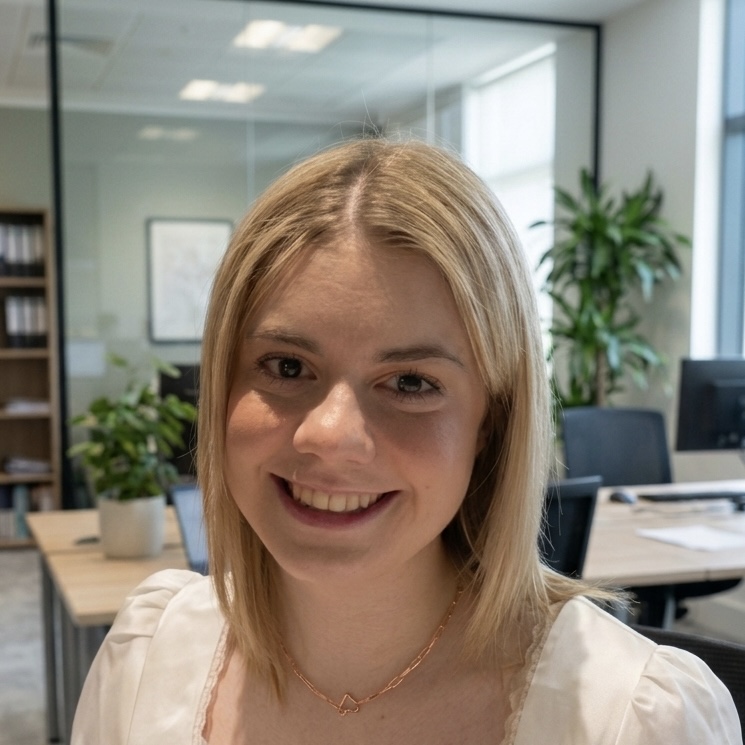
Emma Brain
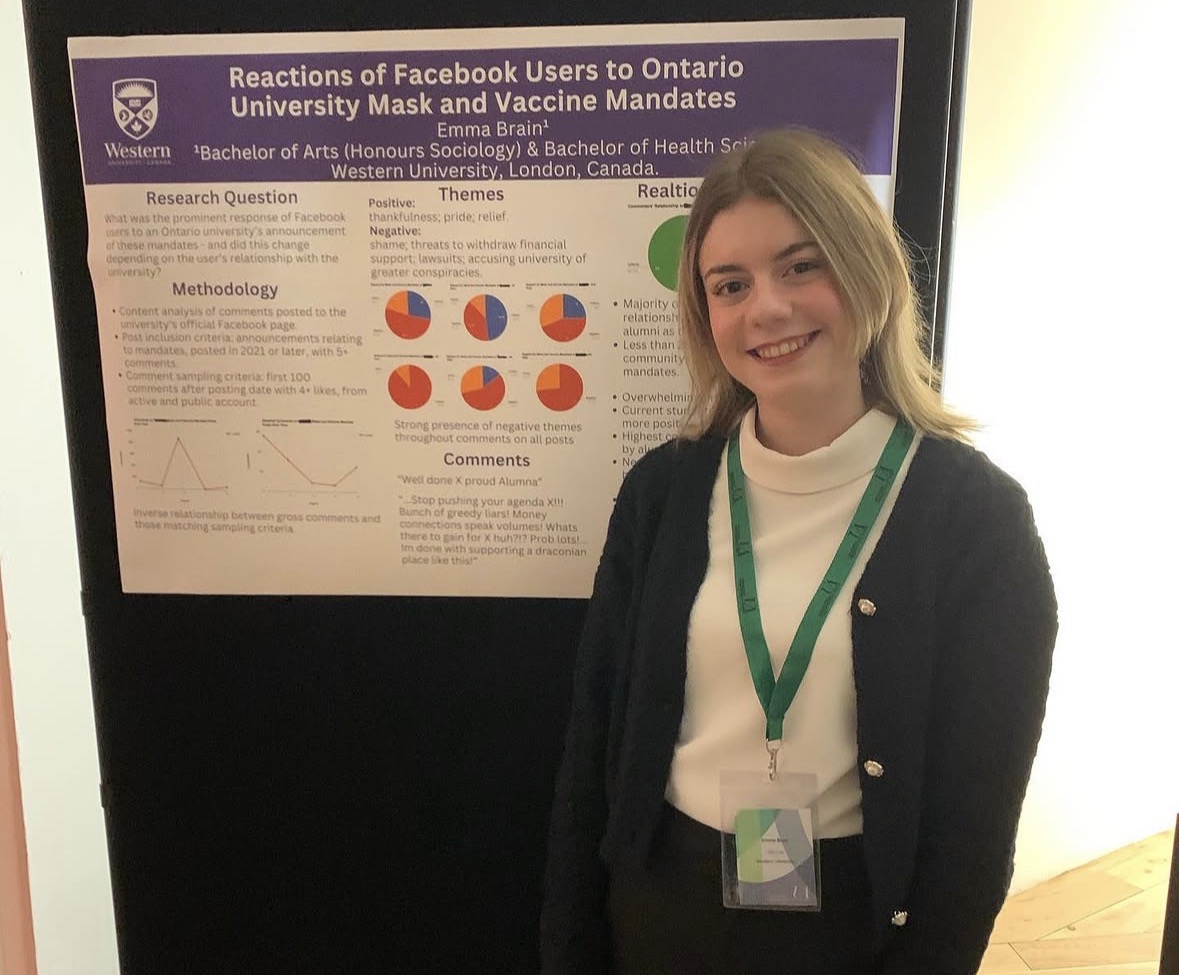
Emma Brain is a GUA Alumni, with double Highly Commended Awards in Social Science: Sociology & Social Policy from 2023 and again in 2024. She recently completed her Master’s Degree in Sociology from the University of Toronto and stepped into the all-too-familiar question facing graduates today: What comes next? and How do I get there?
Following her on LinkedIn, we had seen her passionate, and maybe, at times, frustrated posts about her personal journey from academia into employment, offering an honest and insightful perspective on navigating the transition and we reached out to chat on this further.
Her story is not just about securing a role, but about understanding what it really means to be “job ready.” Through her experience, Emma reflects on the challenges, expectations and adjustments that shaped her approach and offers practical insights for students and graduates preparing to take that same step.
Our conversation began reflecting on her academic journey…
Educational Background and Career Planning
Did you always intend to pursue a master’s degree rather than going straight into employment after undergraduate studies?
I never considered going straight into employment after a graduated by undergraduate studies, I knew I wanted to pursue my subject for a little longer. I initially considered professional school but discovered a passion for research and academia, leading to a master’s degree. The real first main question I had was post masters, and that was whether to transition directly into a PhD or gain workforce experience first.
What were your undergraduate and master’s degrees in?
My undergraduate was in Sociology and Health Sciences at Western University. My master’s was in Sociology, completed as an accelerated one-year programme combining coursework and research simultaneously, whereas typical programmes take two years and this was at the University of Toronto.
Do you still feel a PhD is on the cards one day?
Yes, definitely someday, but first I want to see what organisations I work with are doing in my field and gain real-life experience. I will see where opportunities lead me and whether I feel called to return to intensive graduate-level research in time.
Transition to Employment
Was the decision to pursue employment first encouraged by your tutors or was it your own choice?
The University of Toronto strongly encouraged me to pursue a PhD immediately, but mentors from my undergraduate institution at Western University encouraged me to explore working for a while first, so I had two different perspectives to consider.
Do you feel choosing employment first was the right decision, given the path to finding employment? Do you have regrets?
I have no regrets now that I’m enjoying my position. However, during the job search, when it took longer than expected, I questioned myself and thought I could have been a year into a PhD already. Finding a position I enjoy confirmed it was the right call.
I wasn't expecting it [a job] to be so complicated. I expected to find a position within a month or two.
Emma Brain, 2 x Highly Commended Social Science: Sociology & Social Policy Winner
Job Search Experience
Did you expect the job search to be as complicated as it turned out to be?
No, I wasn’t expecting it to be so complicated. I expected to find a position within a month or two. Mentors had told me for years that my combination of disciplines was in demand, so I felt confident about finding a position easily. The difficulty was a surprise I had to come to terms with.
Did you have clear roles you wanted or didn’t want, and did you find that was restricting you?
I knew I really wanted to remain in research, especially working with equity-deserving communities and marginalised groups. My master’s thesis focused on disability studies and social inclusion, so Equality, Diversity and Inclusion (EDI) roles were obviously first on my list. However, I was flexible to work in other areas utilising the same skill set. Ideally, I had hoped for an applied research career.
How did your job search strategy evolve?
I started applying to ideal roles, ones that were exactly what I wanted. When I did not receive many interview invites, I panicked and then dispersed applications too broadly across all industries where I thought I had relevant skills. This didn’t work well either.
Success came when I refocused on jobs that balanced not being exactly ideal but still advancing the same goals and allowing the use of skills I was most passionate about.
I knew I wanted to remain in Toronto, where I had moved a year earlier for my master’s and I had been told “Toronto is the spot” for work in my field, in Canada, especially for entry-level positions, so I thought I was already in the right location.
Were you applying for entry-level or mid-level positions?
I started applying to mid-level managerial roles, especially in areas where I already had experience. When I realised I was not getting any success there, I had to move down and apply to lower-level roles to get more consistent interview invites.
This was unexpected and disappointing, especially since I’d been told those mid-level roles were what I was prepared for.
How many job applications did you submit, and how many interviews did you receive?
I applied to over 700 positions and received slightly under 20 interviews.
What motivated you to keep going during the difficult search period?
I had periods where I received several interview invites in a week, got my hopes up, then felt devastated when none worked out. For a couple days at a time, I couldn’t send more applications. Talking with friends going through the same thing helped remind me I wasn’t alone. Family support and doing other activities to keep my mind off the search helped maintain my mental well-being to keep going.
This whole process went on for about 6 months, which put a lot of pressure on me, especially since I was living alone and needed to cover all living costs.
I started applying to mid-level managerial roles, but I had to move down and apply to lower-level roles to get more consistent interview invites. This was unexpected and disappointing, especially since I'd been told those mid-level roles were what I was prepared for.
Emma Brain, 2 x Highly Commended Social Science: Sociology & Social Policy Winner
Final Position and Interview Success
Was the role you secured entry-level or mid-level?
It’s a mix – entry-level with management level components, and it’s an intern position, which I wasn’t expecting after a master’s degree. Again, something I didn’t think of applying for at the outset.
However, my responsibilities are more managerial with a partner organisation, giving me experience that should help me move into a more mid-level positions in the future.
Did you end up in a position that allowed you to focus on your core skills and interests?
Yes, my position is almost exactly aligned with my master’s research. When I attended the interview, it felt easy – everything they asked about I knew exactly, and I felt confident that I had done this work before. It didn’t feel like proving anything, just felt like the right role, like a conversation and that proved to be the epiphany moment.
Skills Translation and Academic Preparation
Was the application process explained to you during your master’s or undergraduate programmes?
No, the application process wasn’t really explained at all. I had to figure it out on my own.
What was the biggest thing you learned from this process?
The biggest thing was not giving up. The biggest message I can pass on though is that learning how to market your skill set was crucial.
I realised soon in the application/interview process that I couldn’t just say “I’m a sociologist” in interviews. I had to learn to identify specific skills gained through my discipline and degree, and explain what that meant for the company and role they were hiring for. This wasn’t taught in university, and I had to learn to adapt on my own and learn to speak their language.
I realised soon in the application/interview process that I couldn't just say "I'm a sociologist" in interviews. I had to learn to identify specific skills gained through my discipline and degree, and explain what that meant for the company and role they were hiring for. This wasn't taught in university, and I had to learn to adapt on my own and learn to speak their language.
Emma Brain, 2 x Highly Commended Social Science: Sociology & Social Policy Winner
Did you have to adapt the language you use to express what you do to people outside academia?
Yes, definitely. For example, the companies I interacted with might be interested in managing data but weren’t familiar with how my subject knowledge could help or be relevant, or how working with research participants translates to working with clients and having public-facing skills. I had to be able to explain these connections to them in their own terms. Once I began doing this, my success increased.
Did your GUA awards help in the interview process?
Yes, they did help. Many interviewers seemed impressed, even if not initially aware of them. When asked about presenting work, discussing work with different audiences or speaking publicly, I could reference travelling to Ireland and discussing my work with people from all over the world. This really helped me stand out and impressed many interviewers.
Advice for Others
If you could give one piece of advice to your first-year self, what would it be?
Don’t be nervous to pursue opportunities that seem intimidating. I would see posts for research opportunities or study abroad experiences and feel intrigued, but wonder if I could handle it and question my knowledge, if I’d succeed or if someone better existed for that opportunity.
It took confidence to go for those opportunities, but they were the most impactful in helping me learn outside the classroom and identify what I was most passionate about. They stand out as my most positive undergraduate experiences.
What mistakes did you make at the start of the job application process that others should avoid?
While it’s commonly said you don’t have to meet all requirements in a job posting to apply, you still need to ensure alignment with the position. Having 3 or 4 qualities they’re looking for isn’t enough, you need to consider whether you’d really excel in that role and want to do it every day. It’s obvious to interviewers if you’re not well-aligned with the role. When your authenticity is more apparent, and they can see you’re truly well-suited for the role, you’ll succeed more.
Future Plans and Professional Development
What’s next for you? How long does the internship last?
The current internship lasts about another month and a half and I have another internship lined up after that going to the end of summer. I’m looking forward to gaining experience with another organisation, then hopefully moving up from intern into a more permanent mid-level role.
Are there prospects from those employers for a role beyond the internship?
Yes, they have already expressed that possibility, so I’m really hopeful and remain encouraged that this will become something more permanent.
Do you see any professional qualifications that might be required along the way?
I’m interested in getting more professional certification in EDI (Equity, Diversity, and Inclusion). I’ve studied it extensively within my sociology training, but don’t have the accredited certifications that many roles are looking for, so I’m definitely considering pursuing those.
I had considered it during my master’s and was aware of such certifications, but they were never offered through the school that I was aware of. I think it would have helped, though the accelerated nature of my programme made everyone’s timetables quite busy. Had they been offered immediately after graduation and certainly while I was searching for a job, I probably would have taken advantage of that opportunity.
Emma’s journey is a reminder that becoming “job ready” is not a single moment, but a process of learning, adapting and refining direction. It requires more than a degree alone, it calls for clarity, persistence and the ability to translate your experience into impact.
As Emma looks ahead, with the possibility of further study still on the horizon, her story underscores an important point that there is no single path after graduation. But with the right mindset and approach, it is possible to navigate uncertainty and build a career that aligns with both your skills and your purpose.
Read Emma’s winning work from 2023 “Reactions of Facebook Users to Ontario University Mask and Vaccine Mandates” and her follow-up winning paper 2024 “Health-Promoting Interventions for Homeless LGBTQ Youth in London Ontario – Participatory Action Research Proposal”
